Which is the right age to start yoga? It has been proven that introducing yoga right from childhood is beneficial in many ways. By including breathing techniques through the practice of various asanas, kids become more calm, confident, attentive, and focused. It also aids to control anxiety, relieves stress and helps in developing discipline and patience. Nowadays, children encounter emotional, social and physical challenges from early age. It is therefore important for them to have an avenue open to self-discovery and harmony.
So all the mini-yogis out there, try out these fun and effective postures and experience lightness and love!
What
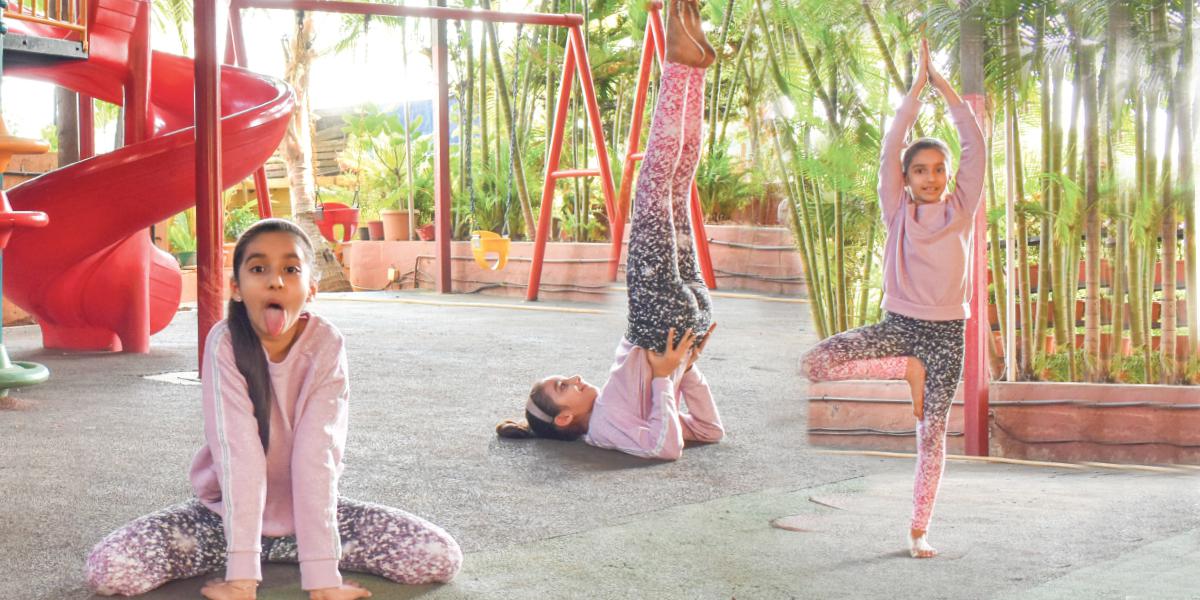
Sarvangasana
Why this Name
The name is derived from the Sanskrit words ‘sarv’ which means ‘all’, ‘ang’ – ‘part of the body’ and ‘asana’ – ‘pose’. It is a posture that influences the functioning of all parts of the body. It is commonly known as the ‘Shoulder Stand Pose’ but in the world of children, it is also called the ‘Candle Pose’.
How to do it
- Lie in supine position with the hands by the side.
- Lift your legs up to form an angle of 90 degrees with the rest of the body.
- Inhale and raise your buttock and back in such a way that you are supported on the shoulders by placing your hands on your back.
- Move the elbows closer to one another. Keep the legs and spine straight and try to rise higher by pressing the elbows onto the floor.
- Hold this position for 6-8 breaths.
- To release, exhale and gently bend the knees bringing your body back down one vertebra at a time, till you are completely on the ground.
- Lower the legs to the floor and relax.
Which Benefits
- Improves blood circulation and nourishes the brain.
- Stimulates the thyroid and parathyroid glands, normalising their functions.
- Strengthens arms and shoulders.
- Stretches the spine and heart muscles.
- Releases constipation.
What
Vrikshasana
Why this Name
The name is derived from the combination of two Sanskrit words ‘vriksha’ which means ‘tree’ and ‘asana’ which means ‘pose’. It is known as the ‘Tree Pose’.
How to do it
- Stand in Tadasana.
- Inhale and bend your right knee so that you are balancing your body on your straight left leg.
- Exhale while you bring the right foot to the left inner thigh. Place the heel of the right foot firmly near the root of the left thigh.
- Inhale, raise your arms and bring your hands into Namaskar Mudra above your head.
- Concentrate on an object in front of you and hold the position for 6-8 breaths.
- Exhale, release your arms and legs, and come back to Tadasana.
- Repeat this pose with the other leg.
Which Benefits
- Improves balance and focus.
- Calms the mind.
- Opens the hips and shoulders.
- Strengthens the legs, back and arms.
- Aids to relieve sciatica.
What
Simhasana
Why this Name
The name is derived from the Sanskrit words ‘simha’ which means ‘lion’ and ‘asana’ which means ‘pose’. It is also known as the ‘Lion Pose’.
How to do it
- Begin in a kneeling position. Spread the knees away from one another such that they almost form a right angle in between.
- Inhale and stretch the crown of the head upwards to lengthen the spine.
- Exhale and externally rotate the palms and place them on the floor in between the knees such that the fingers point towards the body. Arch the spine, looking up at the forehead
- Sticking the tongue out, roar like a lion creating a ‘Haa!’ sound.
- Inhale and come back to the initial position.
- Repeat this 3-6 times.
Which Benefits
- Helps to manage emotions.
- Helps to solve voice related problems and in cases of stuttering.
- Releases tension in the chest and face.
- Devote a few minutes of your day for some fun yogic postures in order to experience their various benefits. Say hello to the mini-yogi in you every day!