
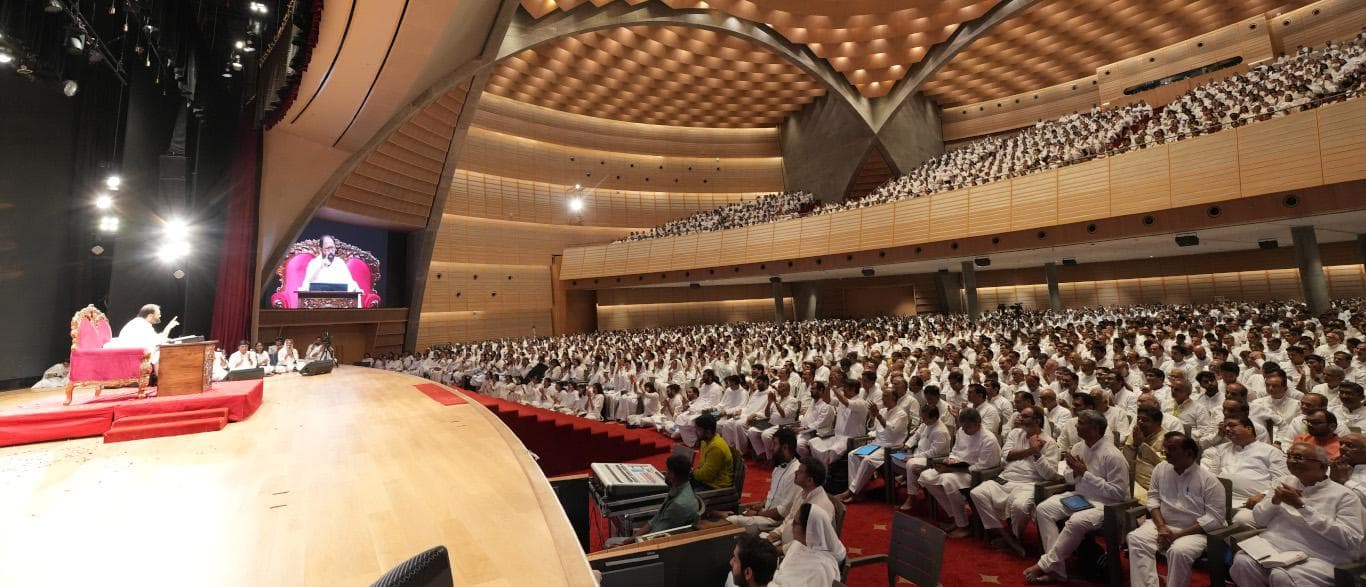
Satsang Shibirs
“Satsang is the Guru's invitation to the land of bliss, beyond the duality of mind.”
Satsang Shibirs or wisdom retreats are held one weekend every month at the Dharampur Ashram. Every year, Pujya Gurudevshri unravels the spiritual treasures from a chosen sacred text, in these retreats.
Over the years, texts have belonged to different traditions. Every shibir includes three to four enriching satsangs along with meditation, bhakti and yoga.
Come and join this course of study. You are invited to stir your core self and bring a fullness to your life.
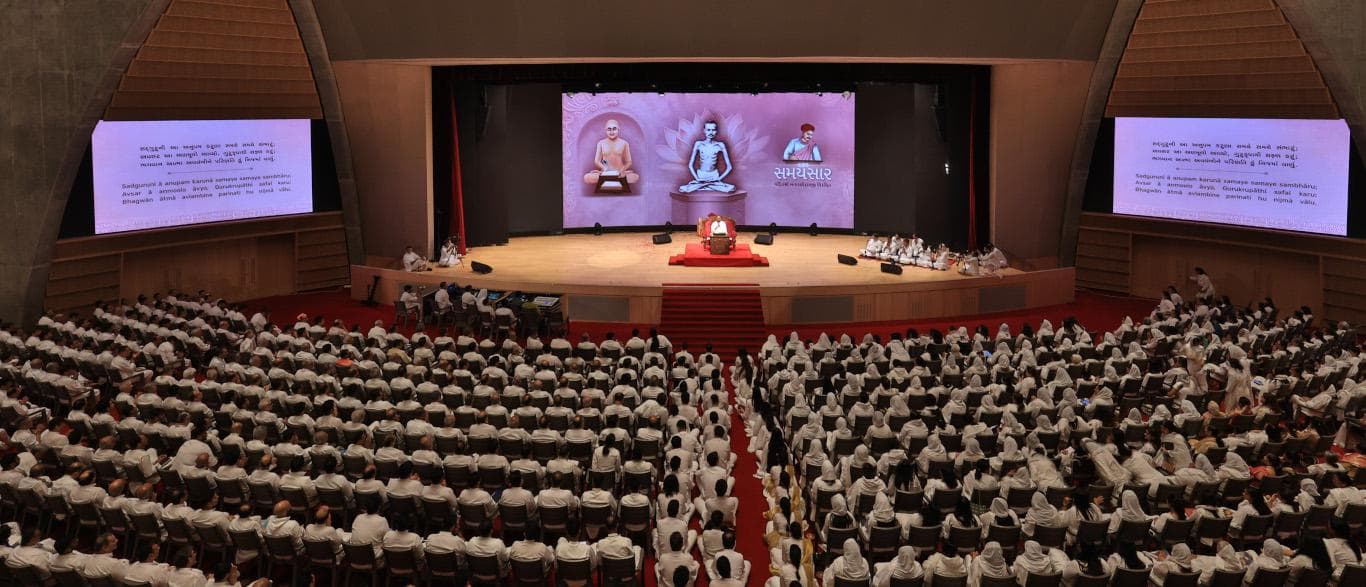
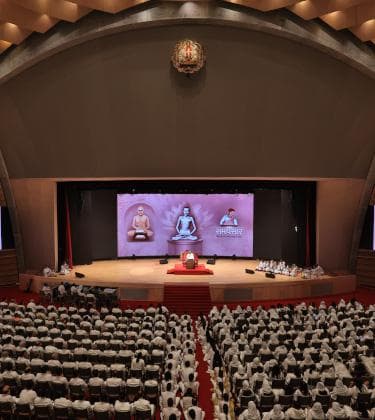
Natak Samaysaar
Pujya Gurudevshri will expound upon the pious text Natak Samaysaar through monthly Shibirs at Shrimad Rajchandra Ashram, Dharampur.
This literary masterpiece transcends art, exploring timeless themes against the backdrop of its era's rich cultural and spiritual tapestry.
Crafted with linguistic mastery, the poetic drama delves into the essence of time, morality and spirituality, reflecting Banarasidasji's intellectual acumen and commitment to using art for spiritual wisdom. “Natak Samaysaar” stands as a radiant gem, leaving an indelible mark on India's literary heritage, guiding readers through a transformative journey of philosophy and devotion.
Benefits





Shrimad Rajchandra Ashram
Shrimad Rajchandra Marg, Dharampur,
Valsad, Gujarat (Directions)

Weekend Retreats, once a month
Reach: Fri after Dinner
Leave: Sun after Lunch

Free Entry

Registration required
Lodging fees as per choice of accommodation

Open for all over 12 years of age

Parents and caretakers with children are designated a separate area, Kids’ Corner, to view the discourse
Upcoming Shibirs
View All
Sun, 27 Dec - Fri, 01 Jan
Dharampur
Varsh Poornahuti Mahotsav Satsang Shibir - 10 Natak Samaysaar
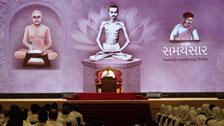
Sat, 30 Jan - Sun, 31 Jan
Dharampur
Satsang Shibir - 1 Natak Samaysaar

Sat, 13 Feb - Sun, 14 Feb
Dharampur
Satsang Shibir - 2 Natak Samaysaar
Sat, 27 Mar - Sun, 28 Mar
Dharampur
Satsang Shibir - 3 Natak Samaysaar
Sat, 17 Apr - Sun, 18 Apr
Dharampur
Satsang Shibir - 4 Natak Samaysaar

Scriptures Expounded
Pujya Gurudevshri's discourses have revealed the hidden treasures of great texts, from Shri Uttaradhyayan Sutra to Shrimad Bhagavad Gita.
Jain Texts
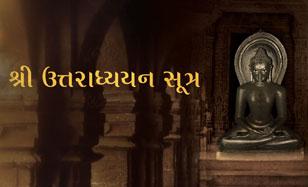
Shri Uttaradhyayan Sutra
Bhagwan Mahavir’s final sermon offers the essence into the fundamental doctrines of Jainism, packed with narratives that foster spirituality.

Swayambhustotra
Composed by one of the foremost Acharyas from the Jain legacy, Swami Shri Samantbhadracharya, Swayambhustotra is a collection of 24 cherished compositions, one dedicated to each of the 24 Tirthankar Bhagwans.
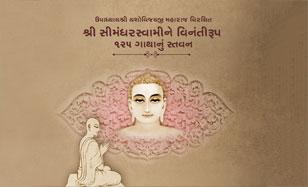
Shri Simandharswamine Vinantiroop 125 Gathanu Stavan
A powerful scripture written by Upadhyayshri Yashovijayji Maharaj in the form of a devotional correspondence with the Lord. Explains the essence of Jain religion with great clarity and simplicity.

Shri Bhaktamar Stotra
Recited as a prayer and sung as a hymn, the famous Jain prayer, an ode to Bhagwan Rushabhdeva, was composed by Acharya Manatunga.
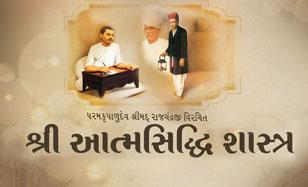
Shri Atmasiddhi Shastra
Shrimad Rajchandraji’s epic composition is a spiritual encyclopedia summarising the essence of all scriptures in 142 verses.
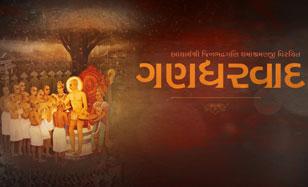
Gandharvada
A logical exposition on the nature of the soul, karma, transmigration, heaven, hell, and liberation, as a dialogue between Lord Mahavir and His Gandhars.

Other Texts
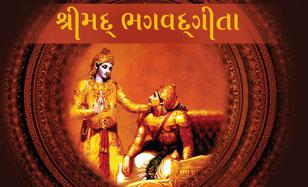
Shrimad Bhagavad Gita
Pujya Gurudevshri reveals the deep meanings that lay within the immortal dialogue between Shri Krishna and His beloved devotee, Arjuna.
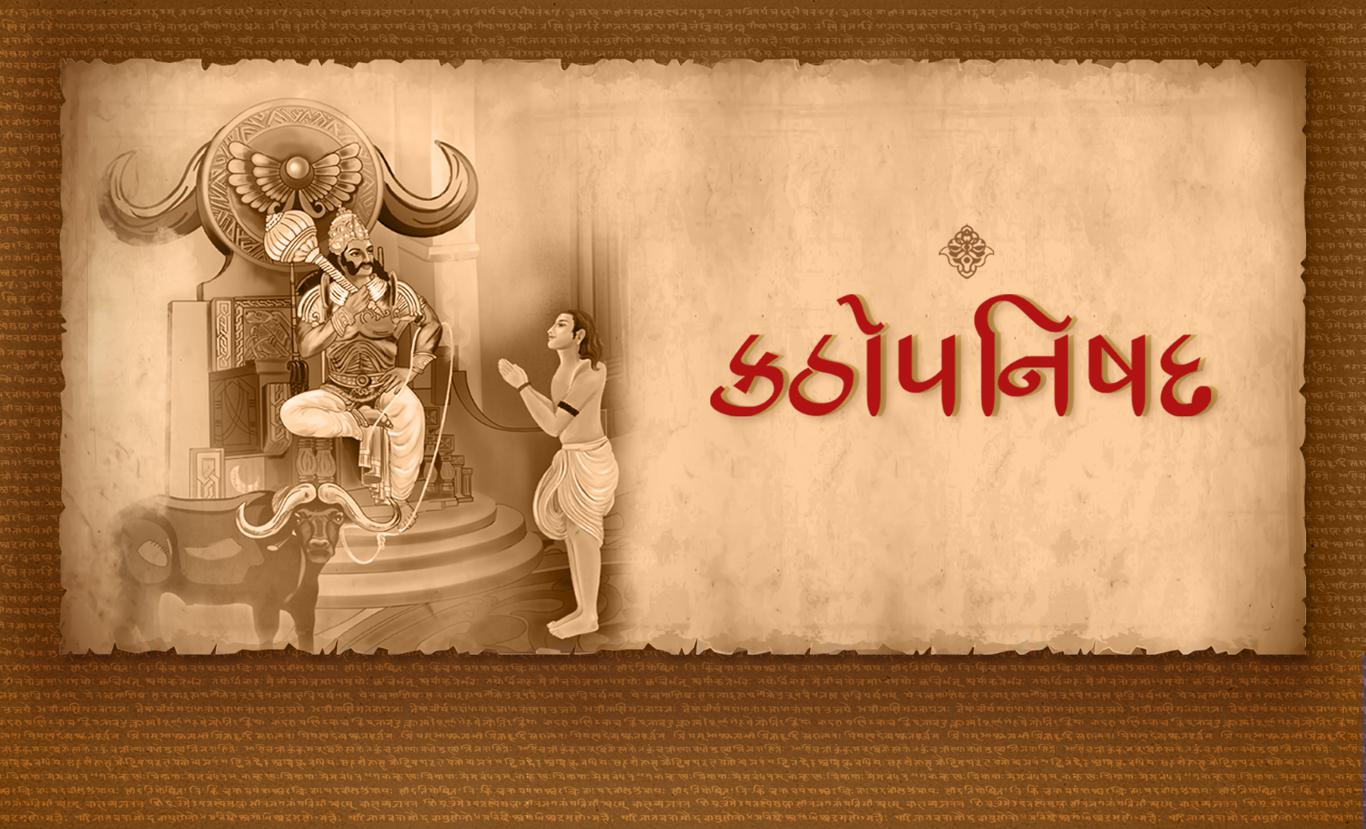
Kathopanishad
Kathopanishad is an extravaganza of spiritual knowledge in the form of a conversation between Nachiketa and Yamraj (God of death).

Vivekchudamani
A poignant dialogue between the Sadguru and the disciple; delivering wisdom from which to discriminate between the real and the unreal.
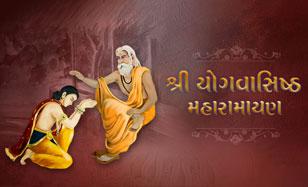
Shri Yogavasishtha Maharamayana
A prolific text composed by renowned Saint Valmiki, structured as a philosophical dialogue between Sage Vasishtha and Shri Rama.
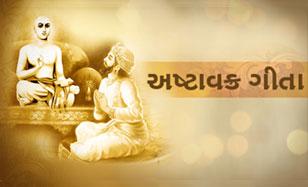
Shri Ashtavakra Gita
A classic work expounding subtle philosophical truths in the form of a lucid dialogue between Ashtavakra and his disciple King Janak.
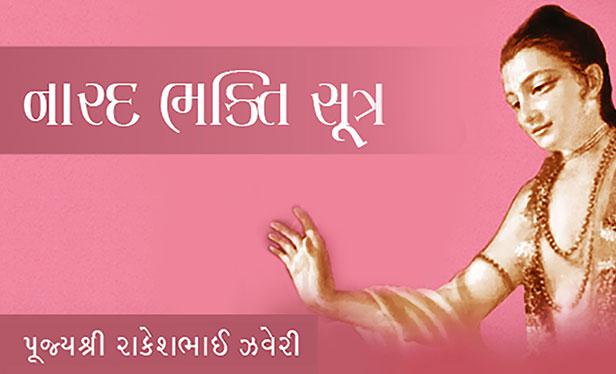
Narad Bhakti Sutra
Venerated within the traditions of Hinduism, this text details the process and importance of devotion by well-known sage, Narada.
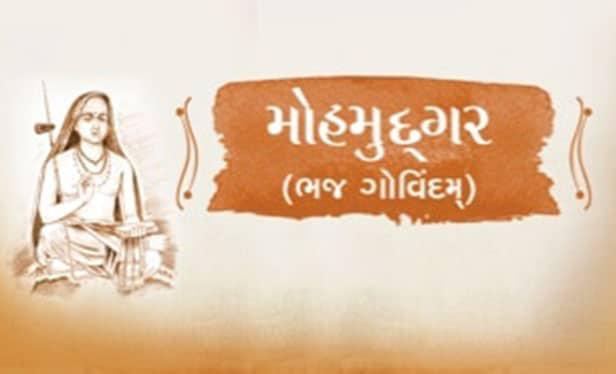
Mohmudgar
Pujya Gurudevshri thrashes the force of delusion with the inspiring verses of Bhaj Govindam, composed by Sri Adi Shankaracharya.

Gangasati’s Bhajans
Pujya Gangasati, a saint poet of Gujarat, composed highly elevating spiritual folk songs. Every bhajan contains profound teachings on bhakti, grace and the sadguru.

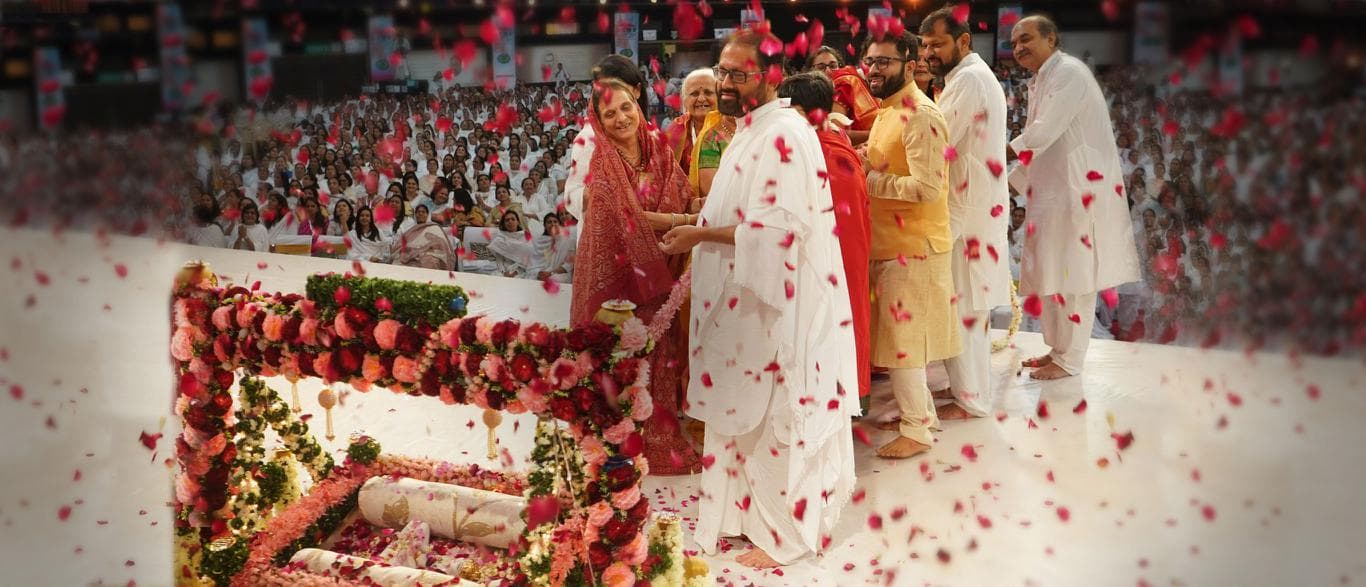
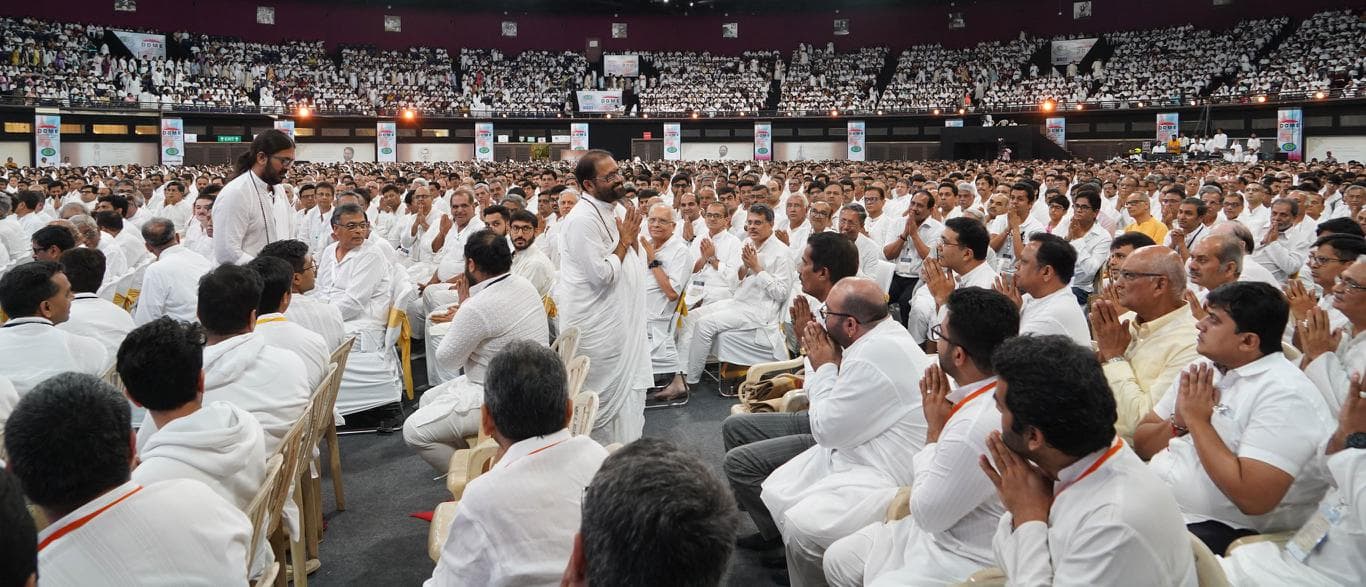
Paryushan Mahaparva
“When our soul is stationed in our soul, it is truly Paryushan.”
The monarch of Jain festivals, Paryushan Mahaparva symbolises the opportunity to converge closer to the true self from all directions.
Designed for seekers to accelerate their spiritual progress, Pujya Gurudevshri has augmented the glory of Paryushan Mahaparva. Since 1992, every year, Pujya Gurudevshri selects a specific spiritual topic and reveals its treasures through a series of stirring discourses in Mumbai.
Today, thousands world over, especially the youth, unite in forging an experiential bond with the Divine through the Paryushan Mahaparva.
Come celebrate this annual spiritual fiesta, revel in the folds of religion, bask in the Master’s presence, and make it an occasion of inner purification.
Festivities of Paryushan
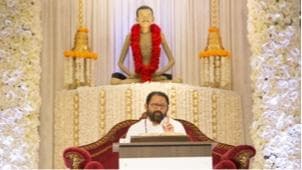
Satsang Series
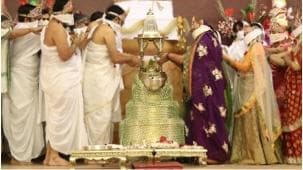
Snatra Puja
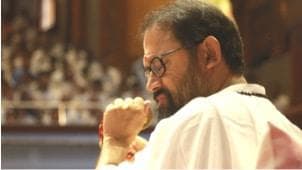
Bhakti and Meditation

Bhagwan Mahavir’s Janma Celebrations

Seeking forgiveness through Samvatsarik Alochana

Tapascharya Parna
Paryushan Pravachanmalas on Shrimad Rajchandra Vachanamrut
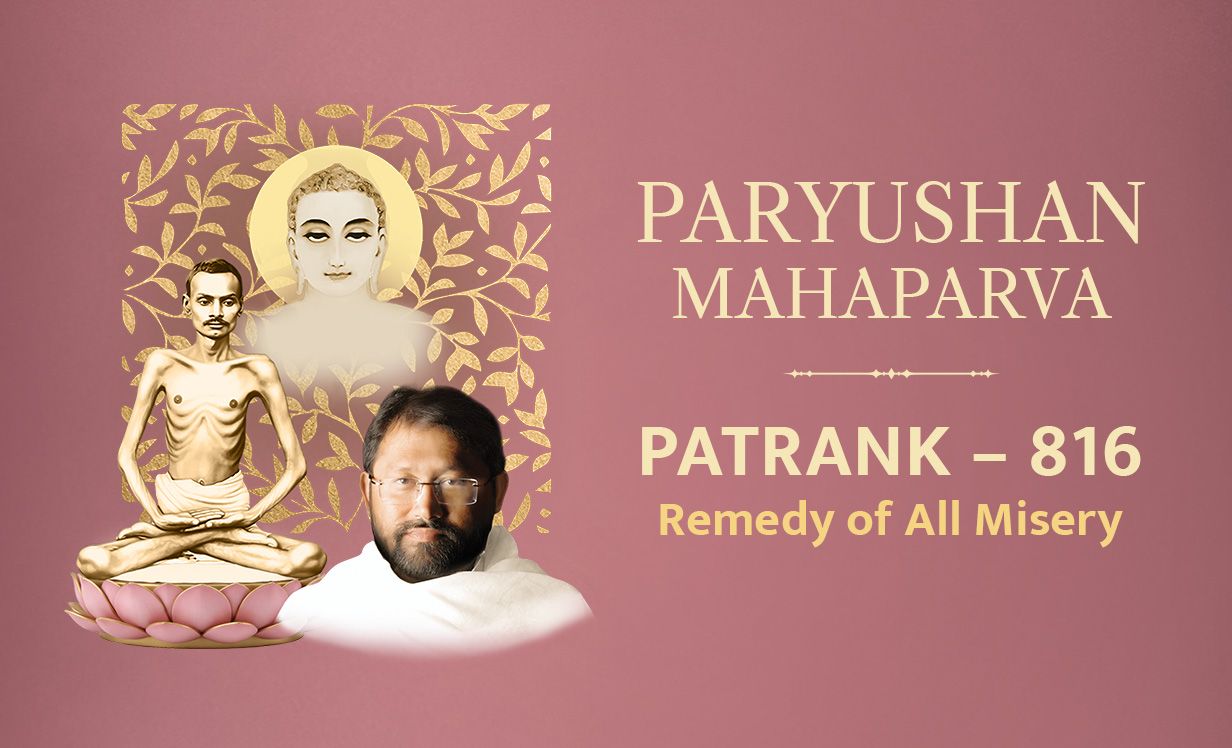
Patrank - 816
Sarvadukhkshay Antarmukhtathi
Remedy of All Misery

Patrank - 903
Dharmanu Yatharth Swaroop

Patrank - 47
Sadguruthi Dharmanu Rahasya
Essence of Religion

Patrank - 505
Paryushan Mahaparva 2023
USA

Patrank - 901
Dwadashangino Saar
Essence of the Jain Canons

Patrank - 843
Vitragno Dharma Jayvant Varto
May the Dharma of Dispassionate Lords Triumph

Patrank - 166
Mokshna Sarvottam Karanroop Vachanamrut
Beneficial Wisdom for Liberation
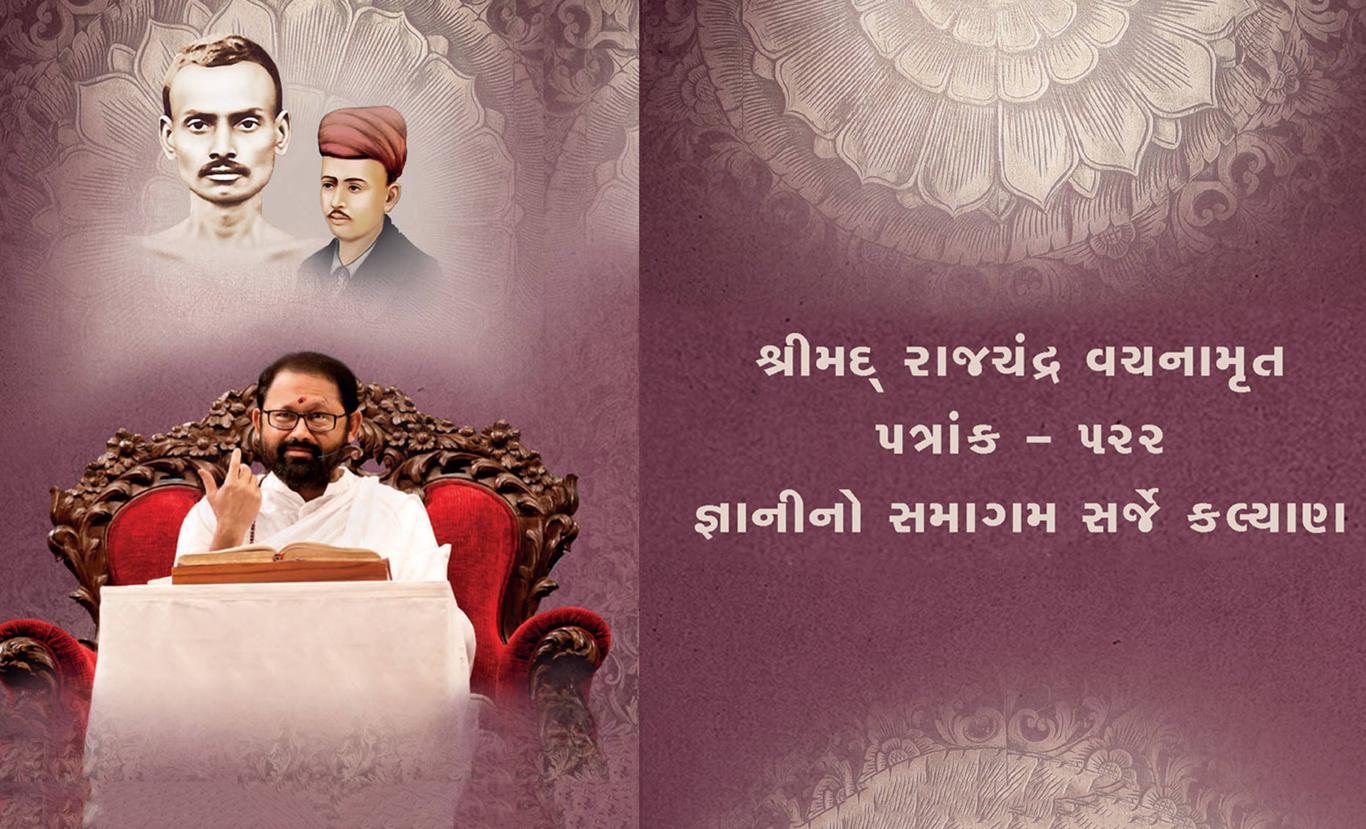
Patrank - 522
Jnanino Samagam Sarje Kalyan
Inner Awakening with an Enlightened Master
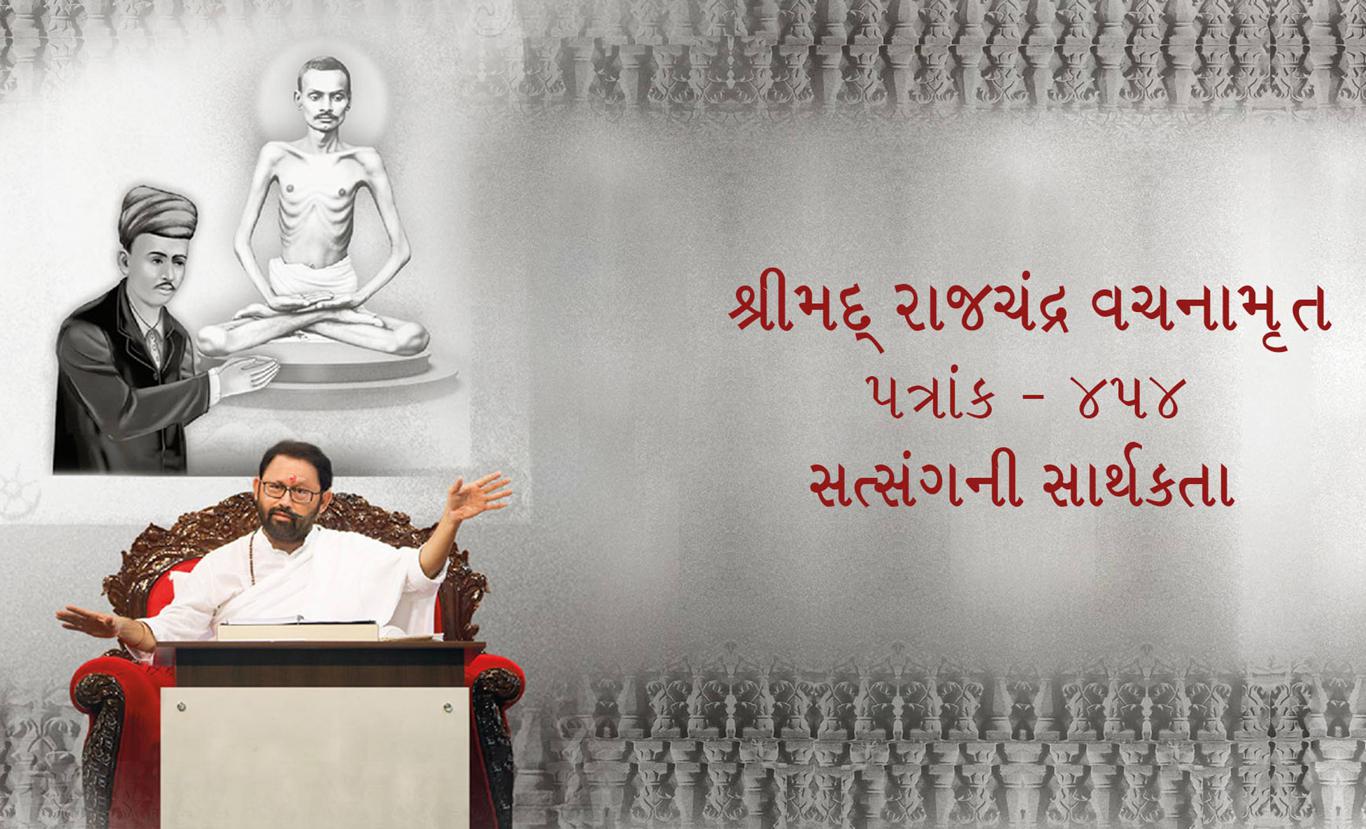
Patrank - 454
Satsangni Sarthakta
Fruition of Satsang
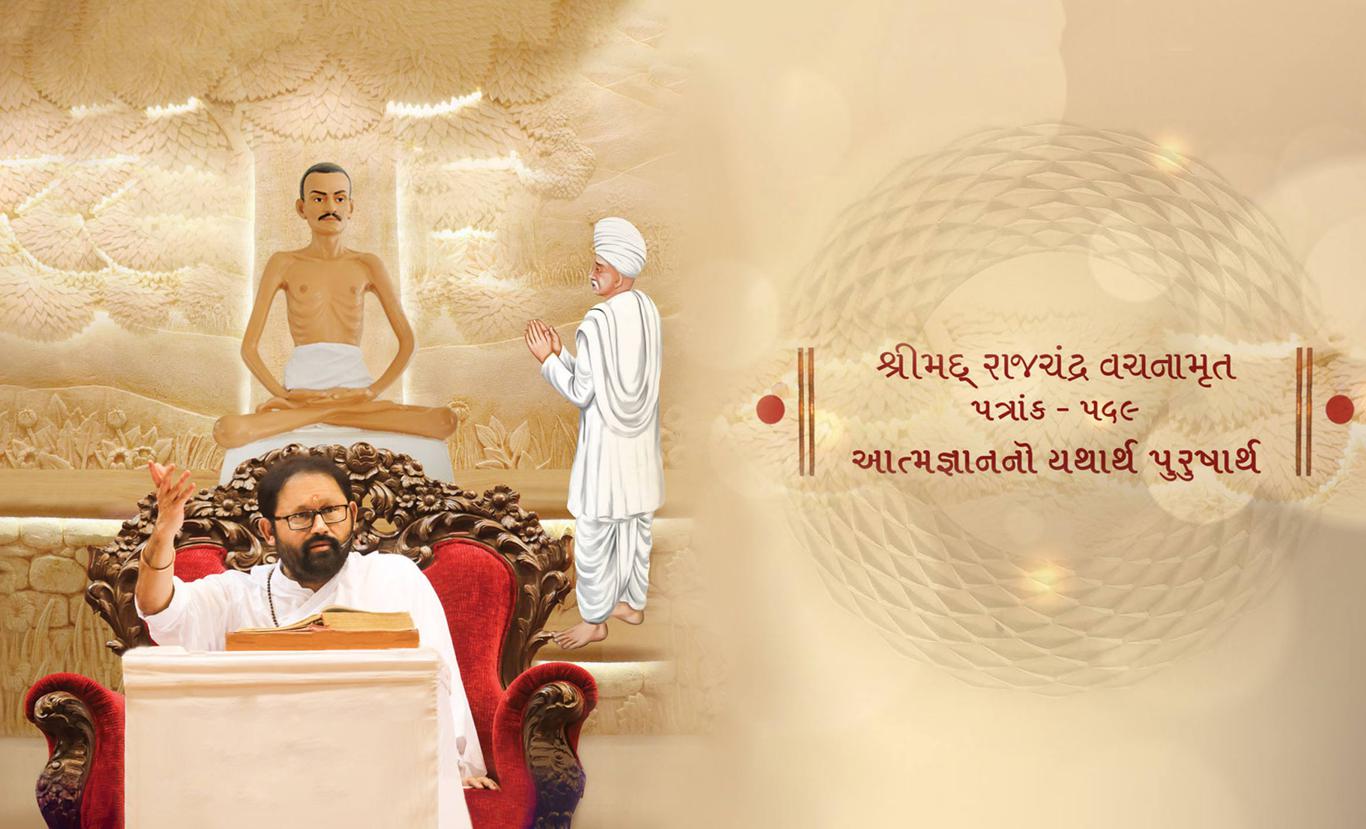
Patrank - 569
Atmajnanno Yatharth Purusharth
Right Effort for Self-Realisation
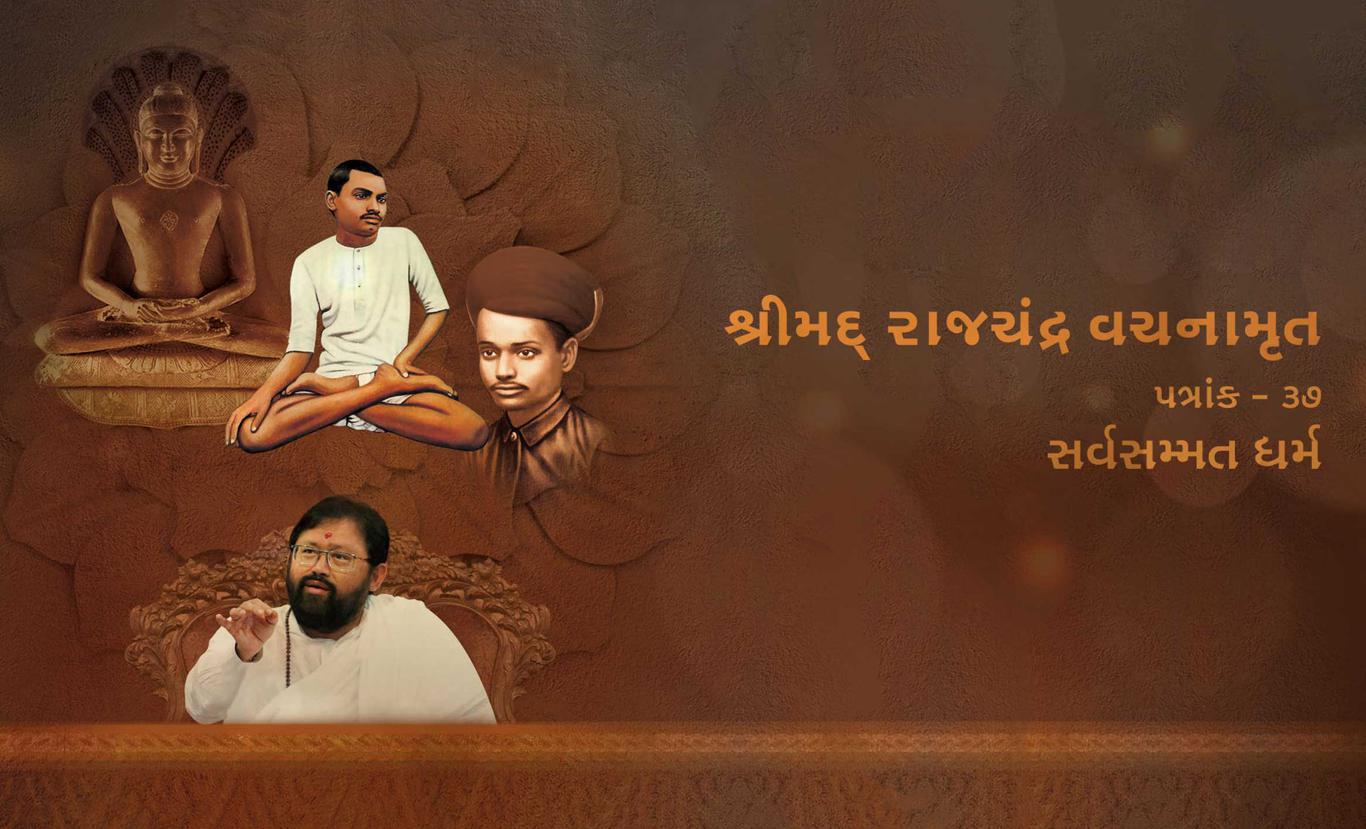
Patrank - 37
Sarvasammat Dharma
The Universally Accepted Religion
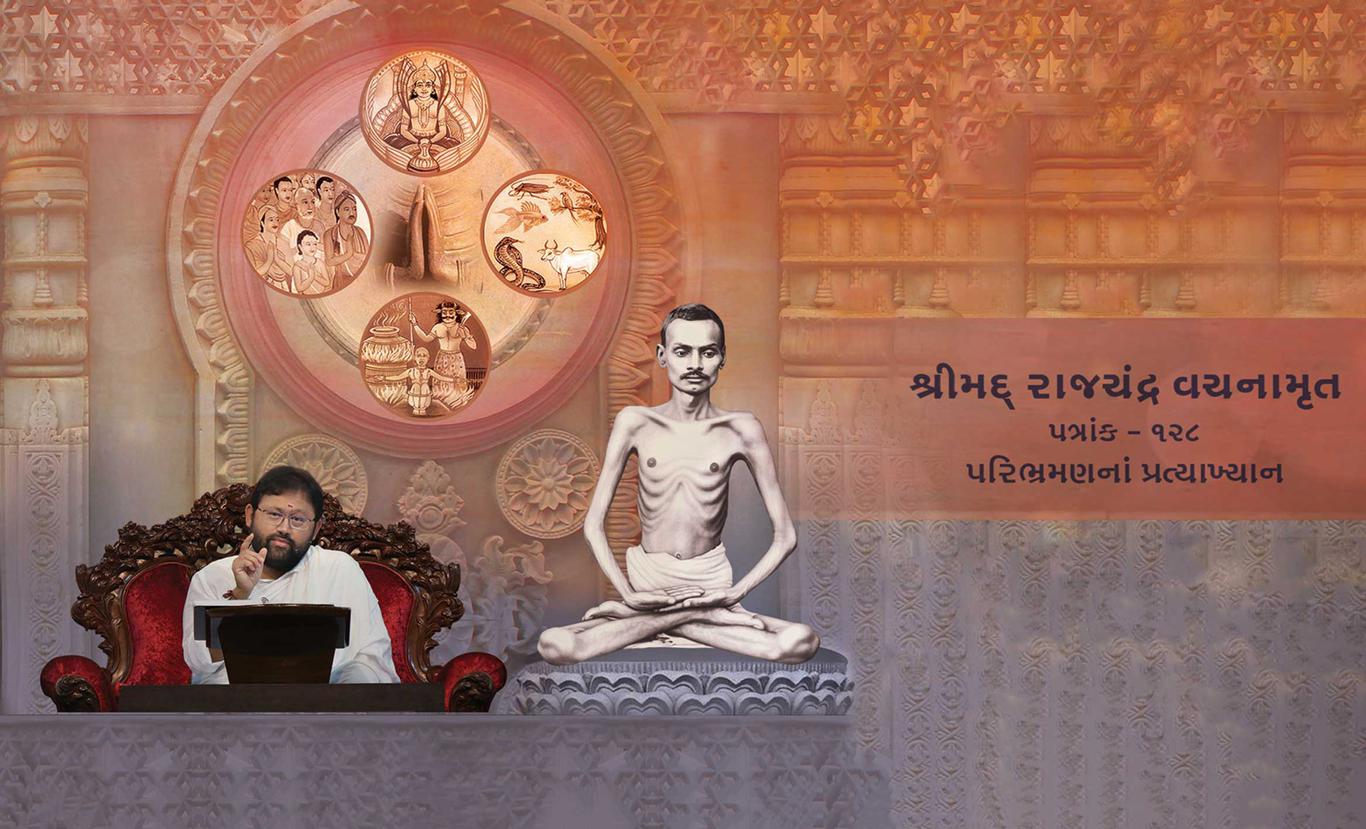
Patrank - 128
Paribhramanna Pratyakhyan
End your Transmigration
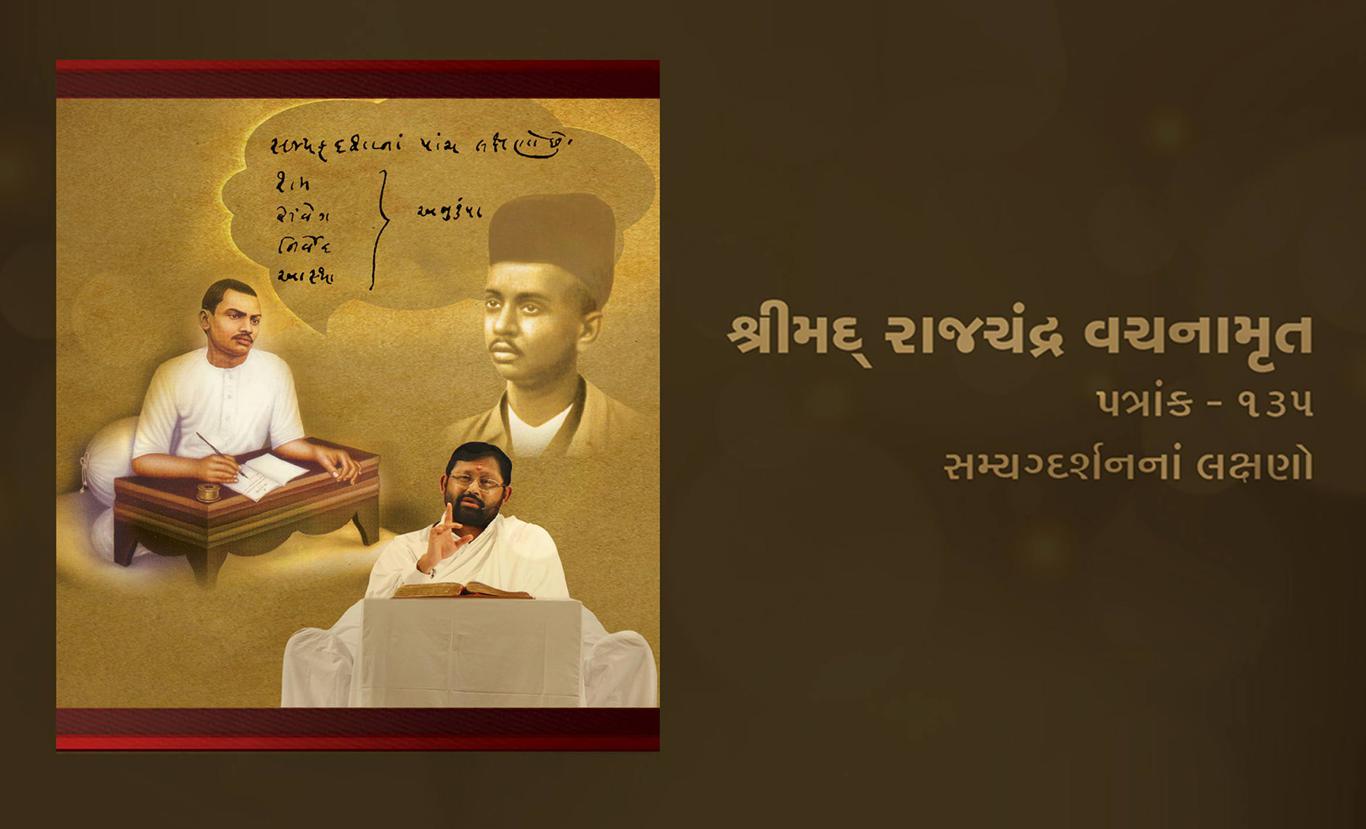
Patrank - 135
Samyagdarshanna Lakshano
Five Attributes of Self-Realisation
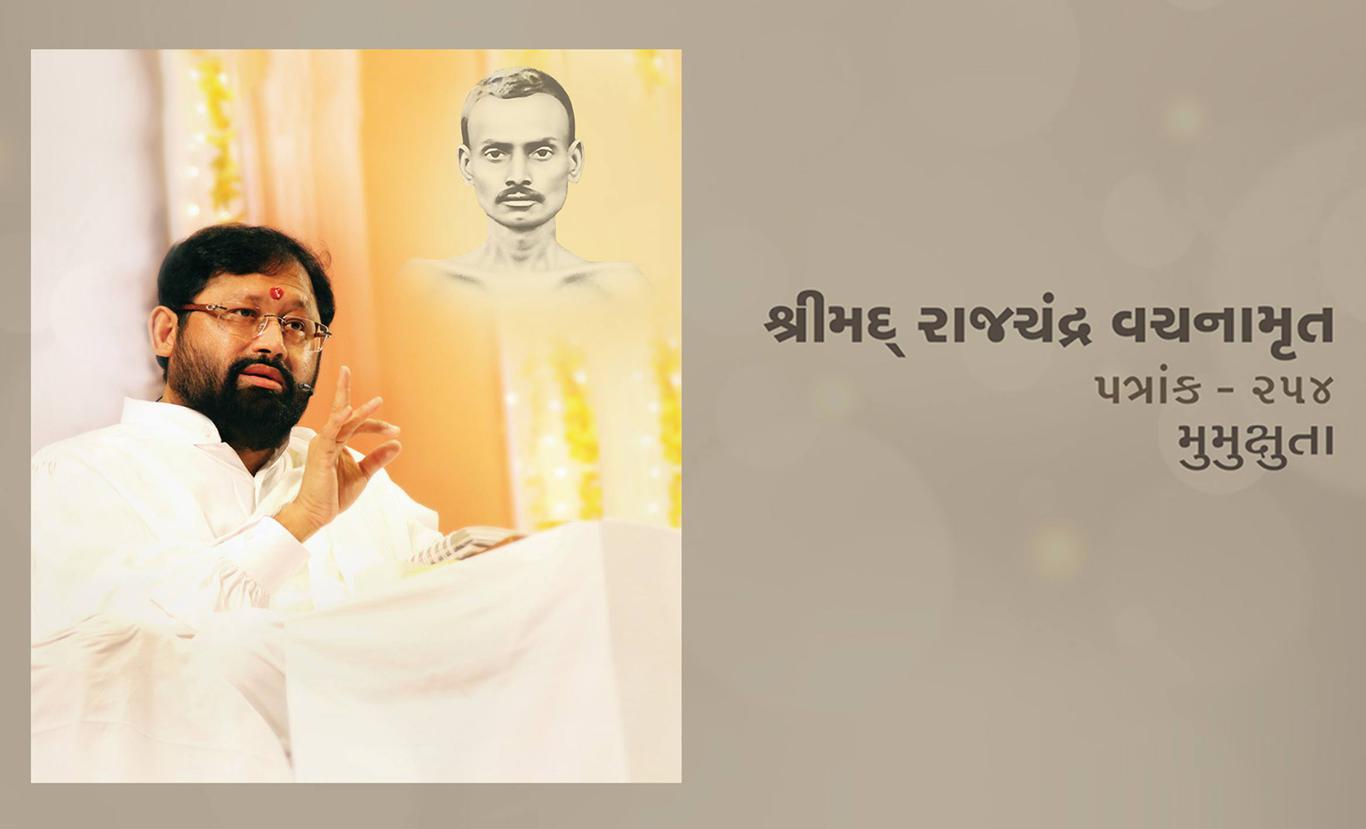
Patrank - 254
Mumukshuta
Becoming a True Seeker
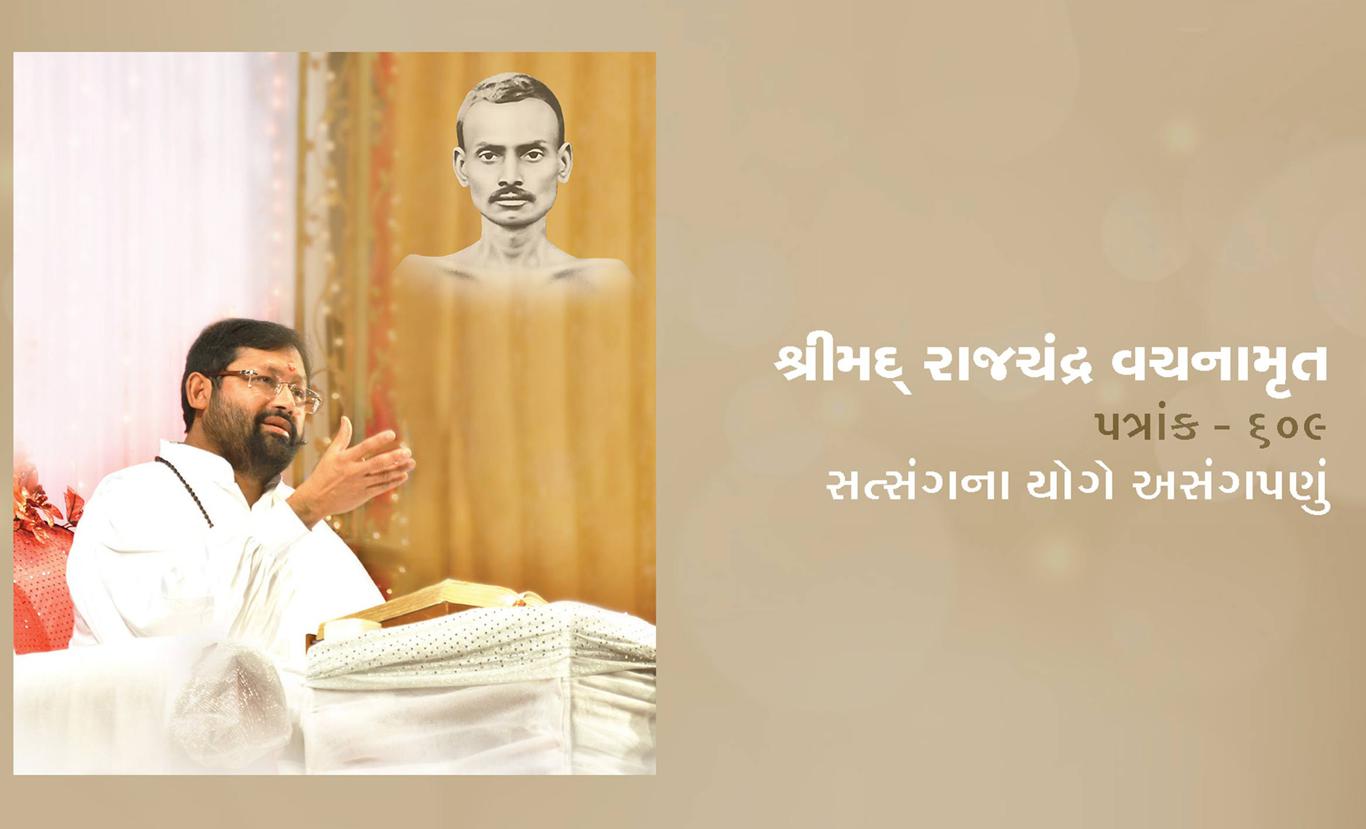
Patrank - 609
Satsangna Yogey Asangpanu
Dispassion through Satsang
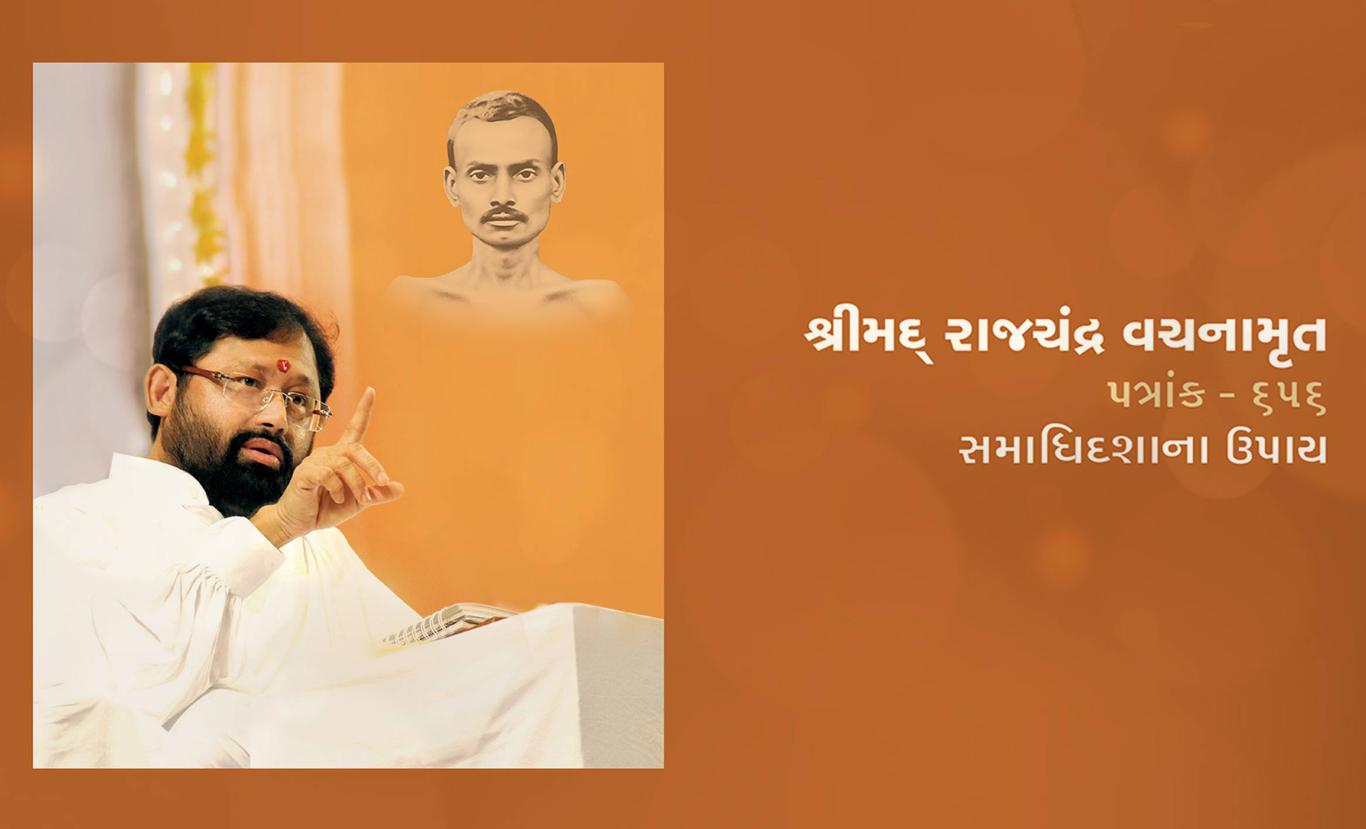
Patrank - 656
Samadhidashana Upay
The Means of Samadhi
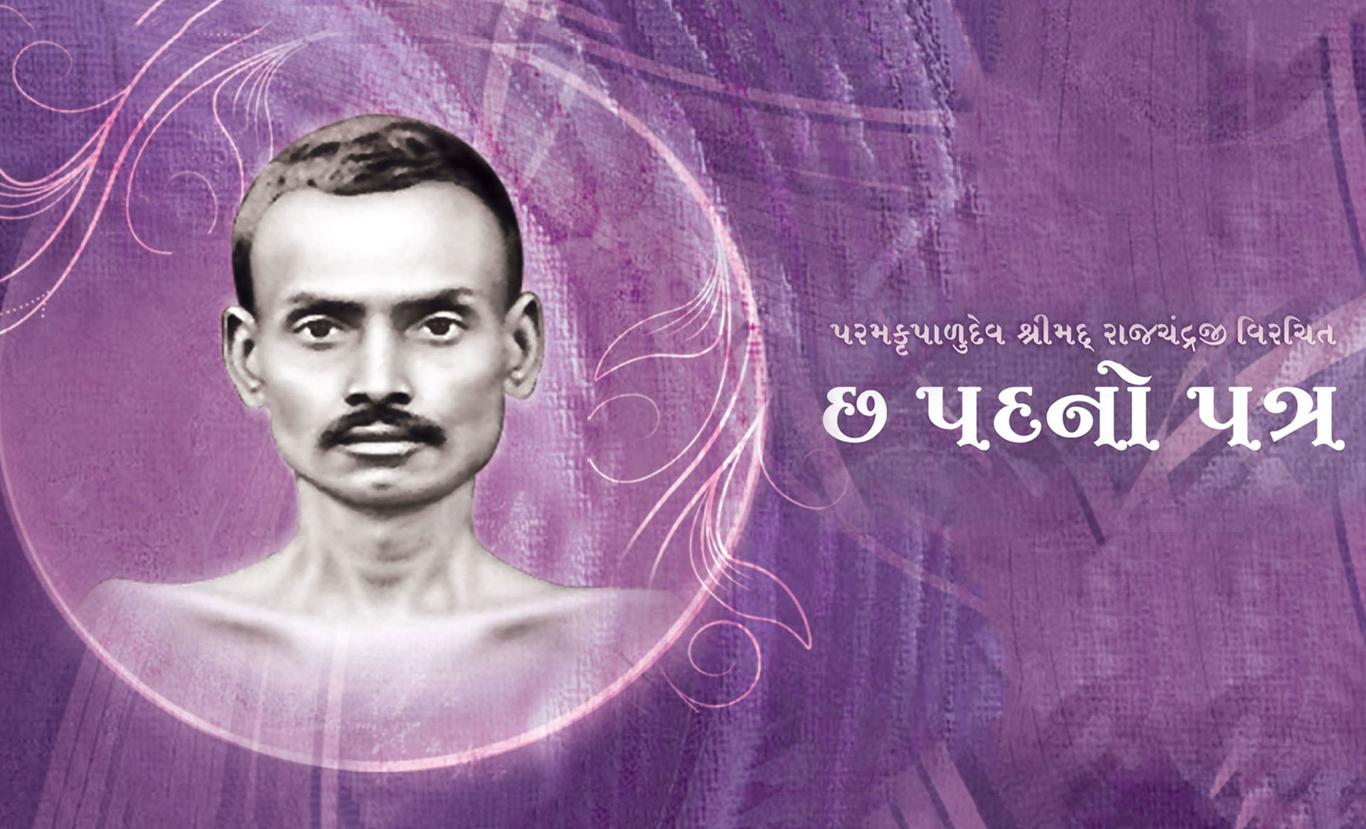
Chha Padano Patra (Patrank - 493)
Samyagdarshanna Nivasna Sarvotkrusht Sthanak
Six Fundamental Truths for Self-Realisation
Satsang Centres Near You
Participate in a range of spiritual activities including viewing Pujya Gurudevshri's discourses, and volunteer in social initiatives at a centre near you.
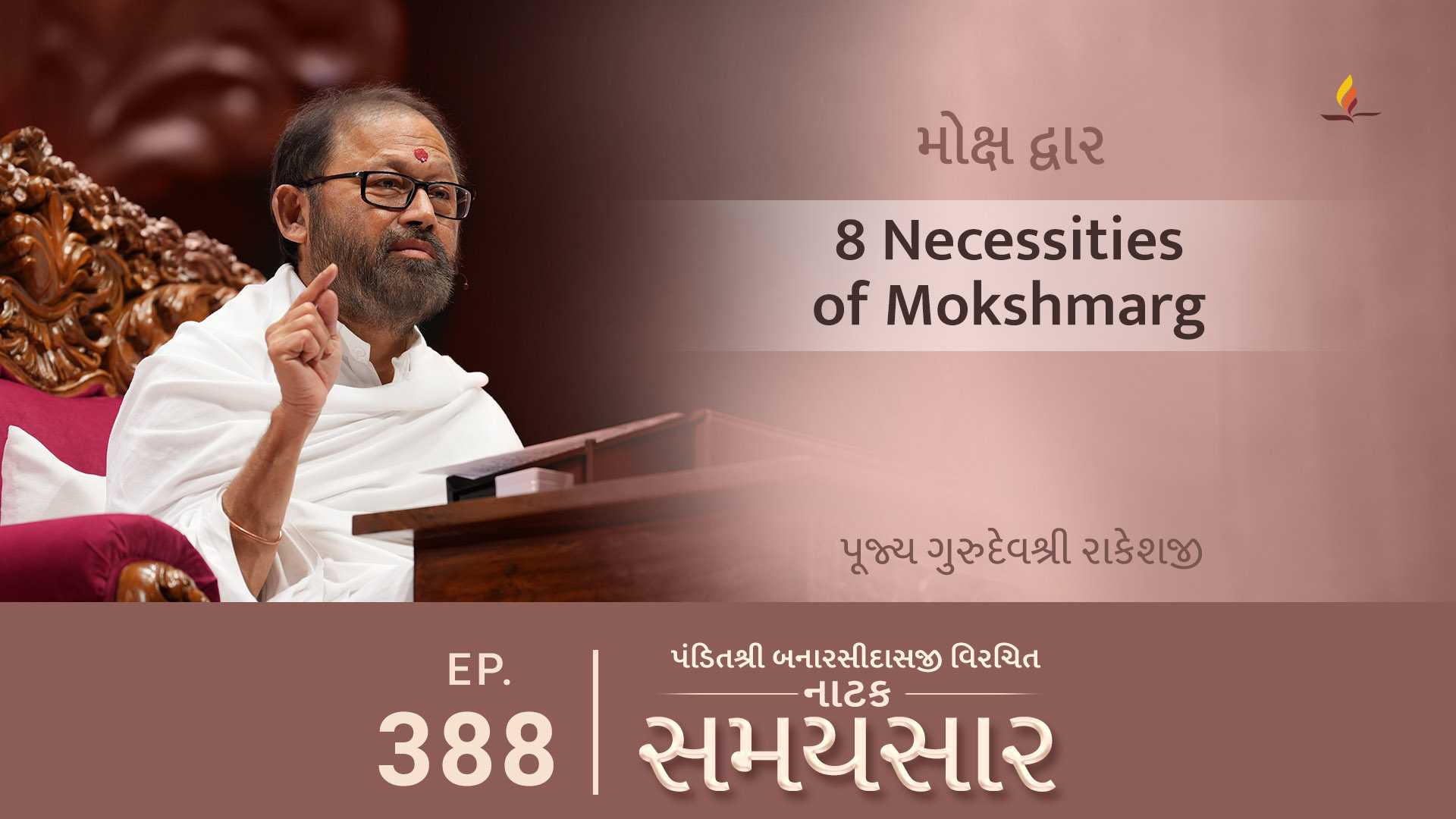
Ep 388 - 8 Necessities of Mokshmarg | Natak Samaysaar - Moksh Dwar (14 Sept, 2026)
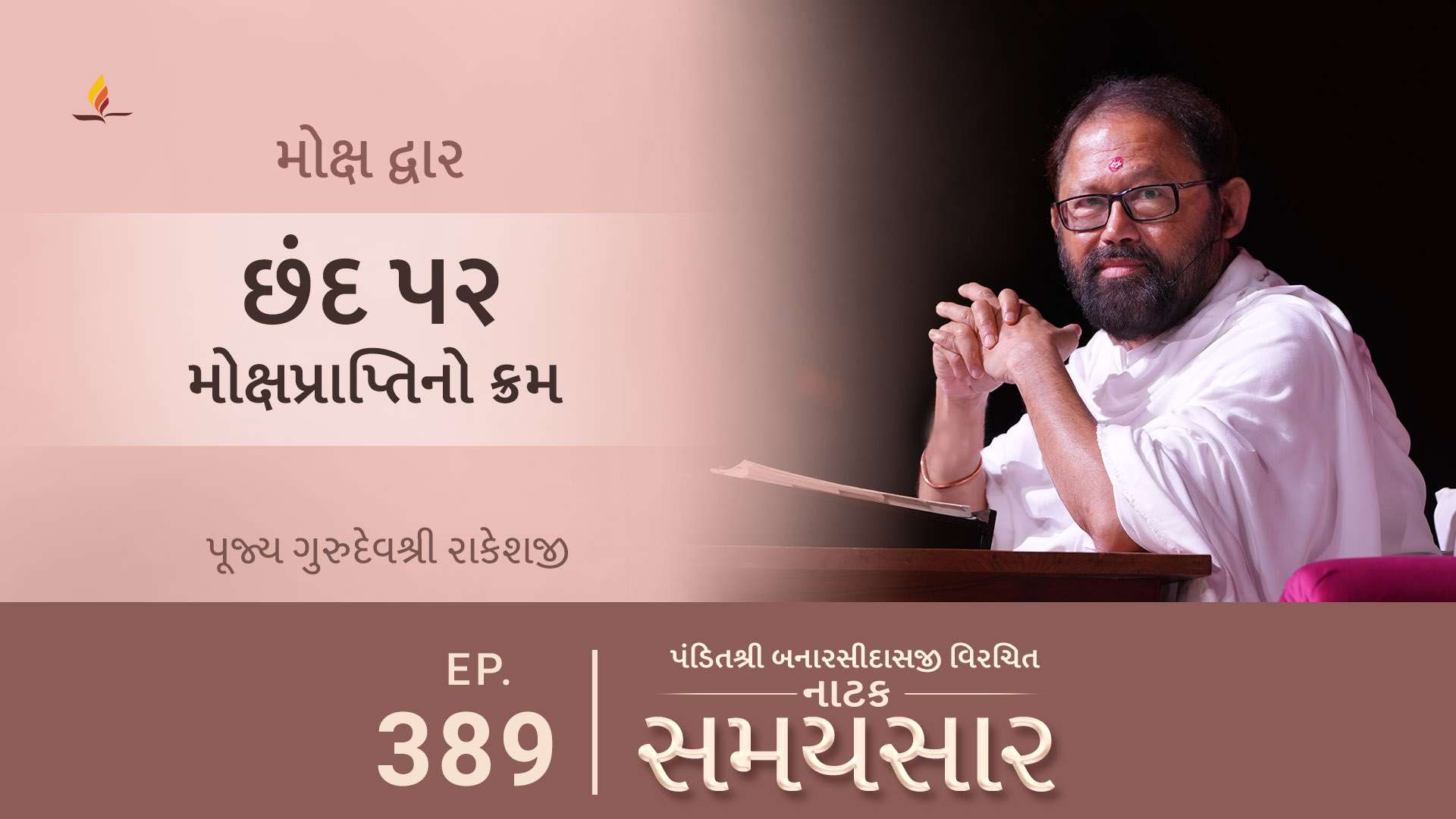
Ep 389 - Chhand 52 - Mokshpraptino Kram | Natak Samaysaar - Moksh Dwar (14 Sept, 2026)
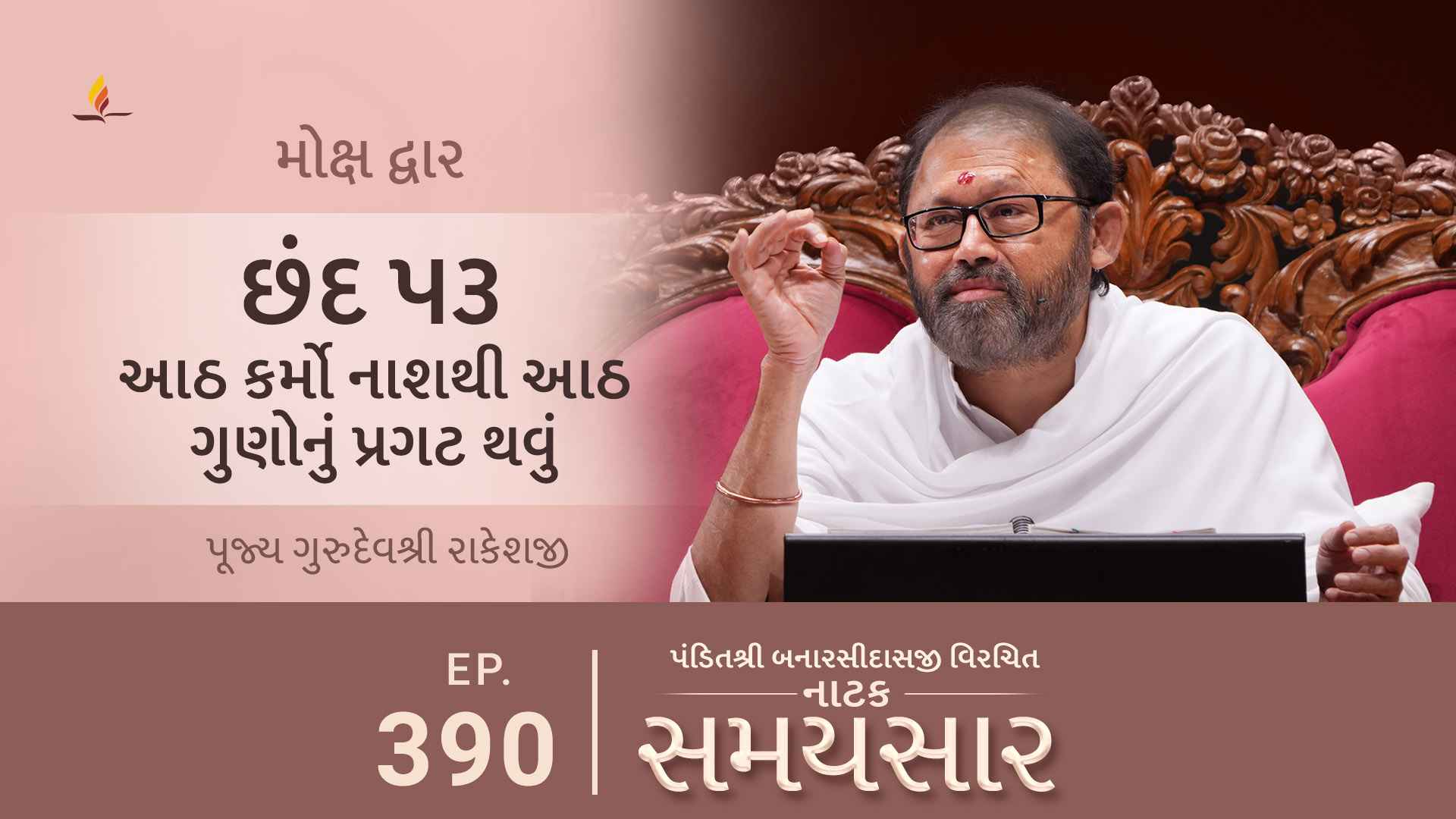
Ep 390 - Chhand 53 - Aath Karmo Nash Paamvathi Aath Gunonu Pragat Thavun | Natak Samaysaar - Moksh Dwar (14 Sept, 2026)
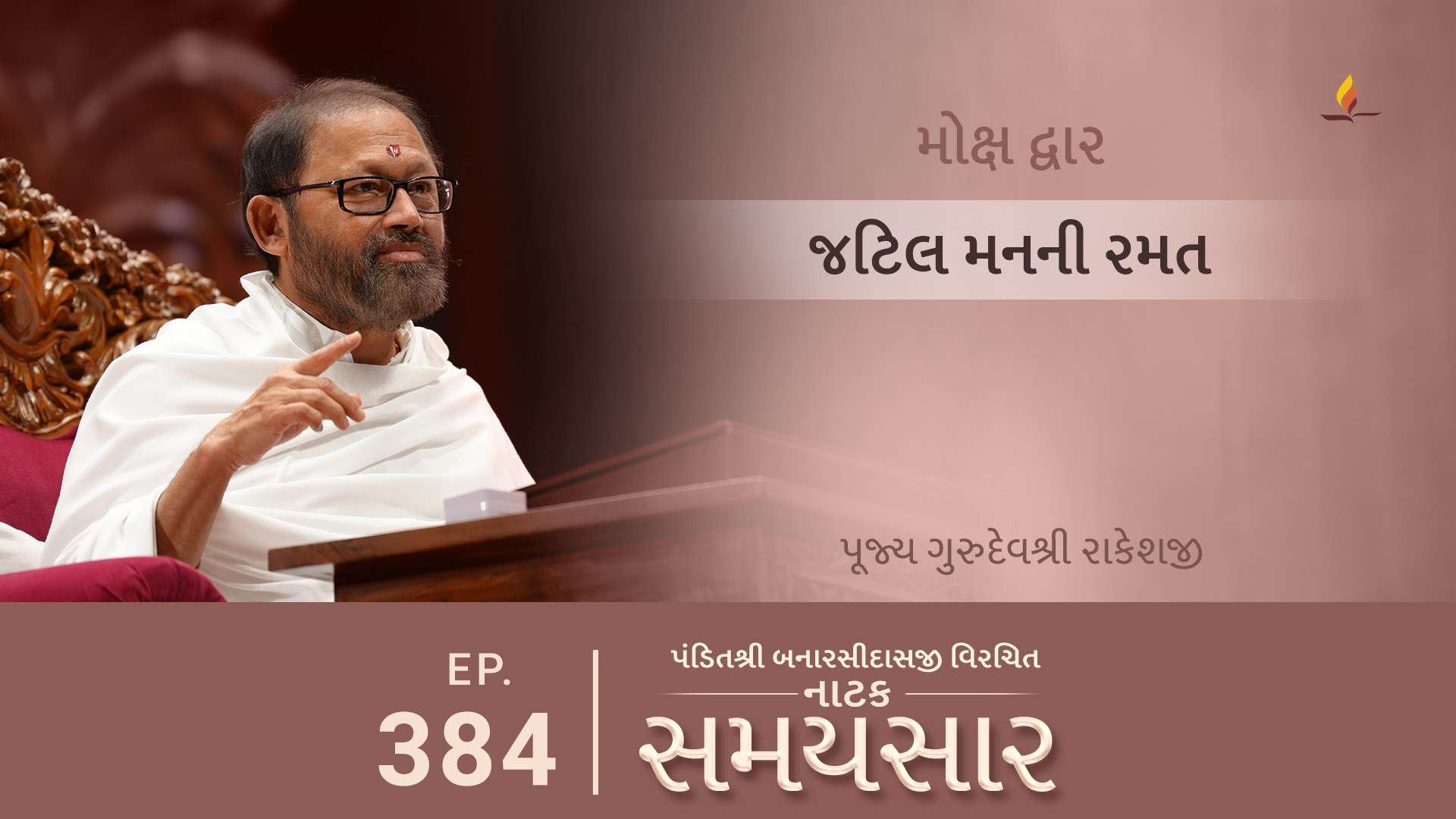
Ep 384 - Jatil Manni Ramat | Natak Samaysaar - Moksh Dwar (13 Sept, 2026)
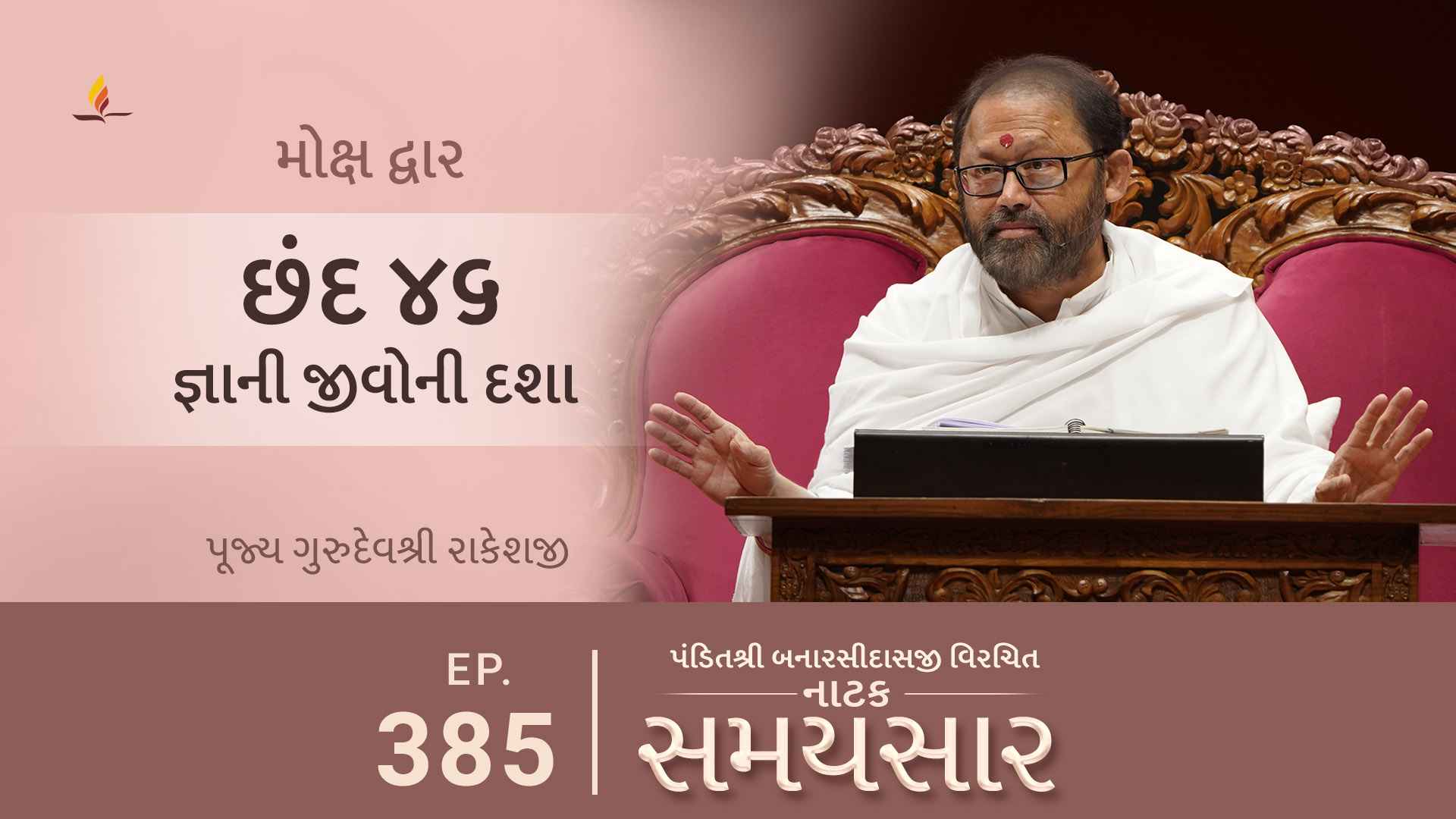
Ep 385 - Chhand 46 - Jnani Jeevoni Dasha | Natak Samaysaar - Moksh Dwar (13 Sept, 2026)
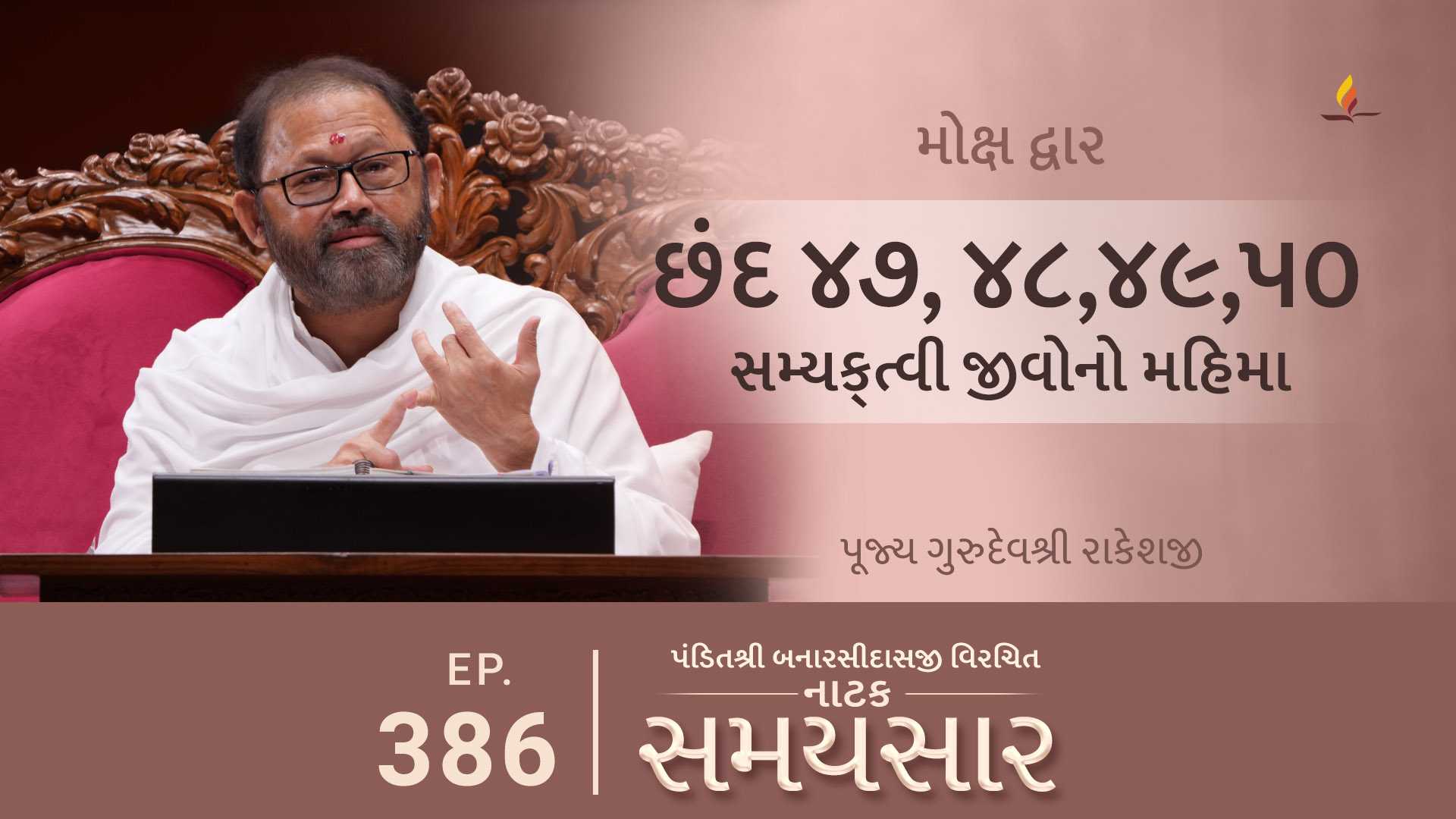
Ep 386 - Chhand 47, 48, 49, 50 - Samyaktvi Jeevono Mahima | Natak Samaysaar - Moksh Dwar (13 Sept, 2026)
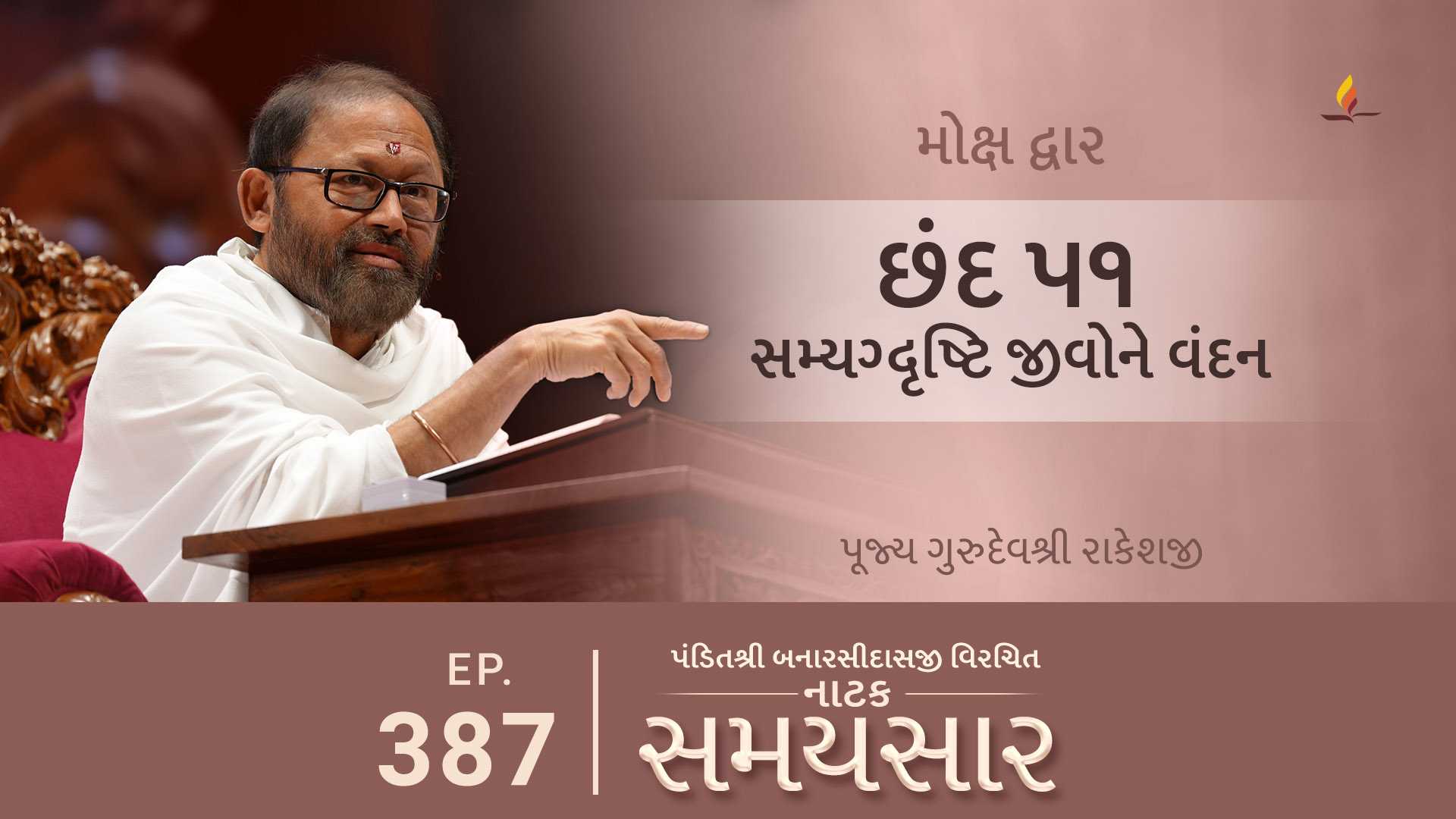
Ep 387 - Chhand 51 - Samyagdrashti Jeevone Vandan | Natak Samaysaar - Moksh Dwar (13 Sept, 2026)
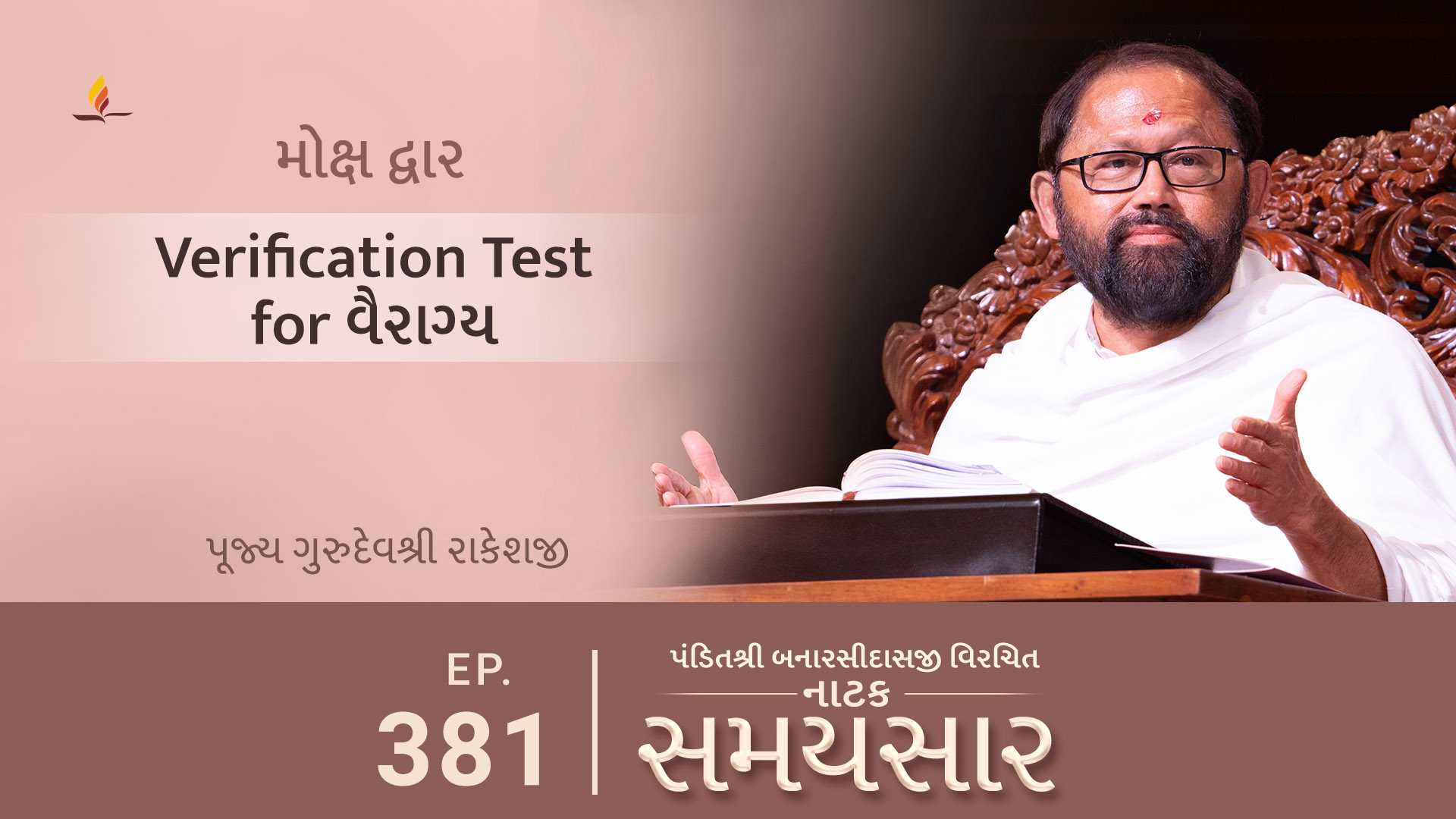
Ep 381 - Verification Test for Vairagya | Natak Samaysaar - Moksh Dwar (12 Sept, 2026)
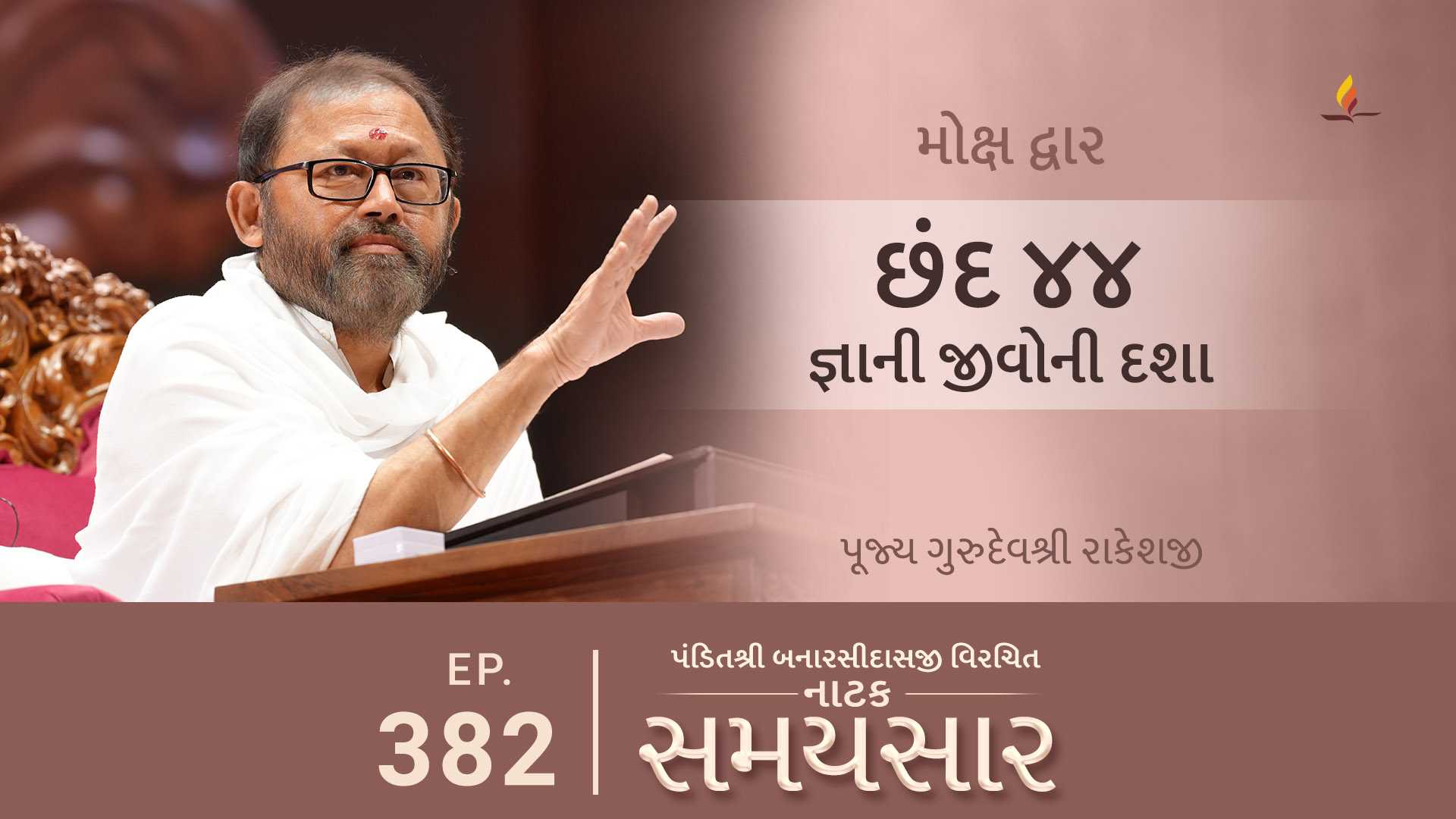
Ep 382 - Chhand 44 - Jnani Jeevoni Dasha | Natak Samaysaar - Moksh Dwar (12 Sept, 2026)
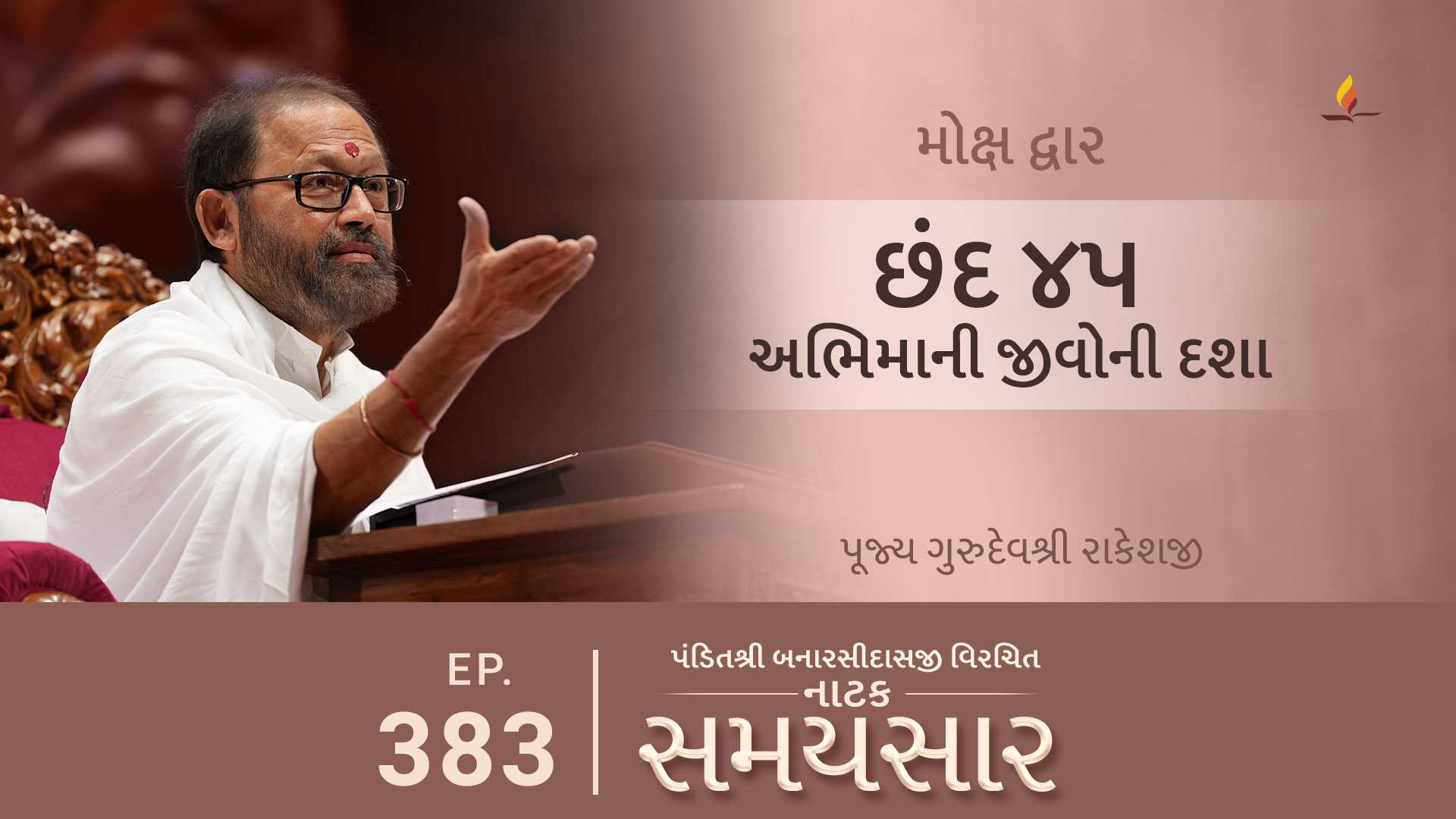
Ep 383 - Chhand 45 - Abhimani Jeevoni Dasha | Natak Samaysaar - Moksh Dwar (12 Sept, 2026)
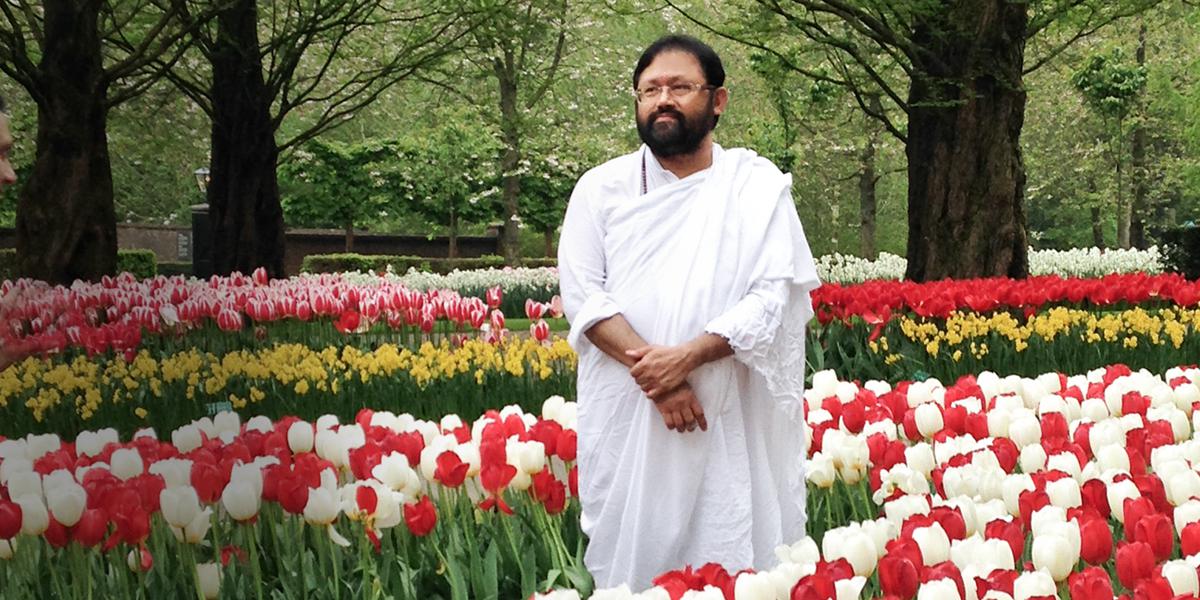
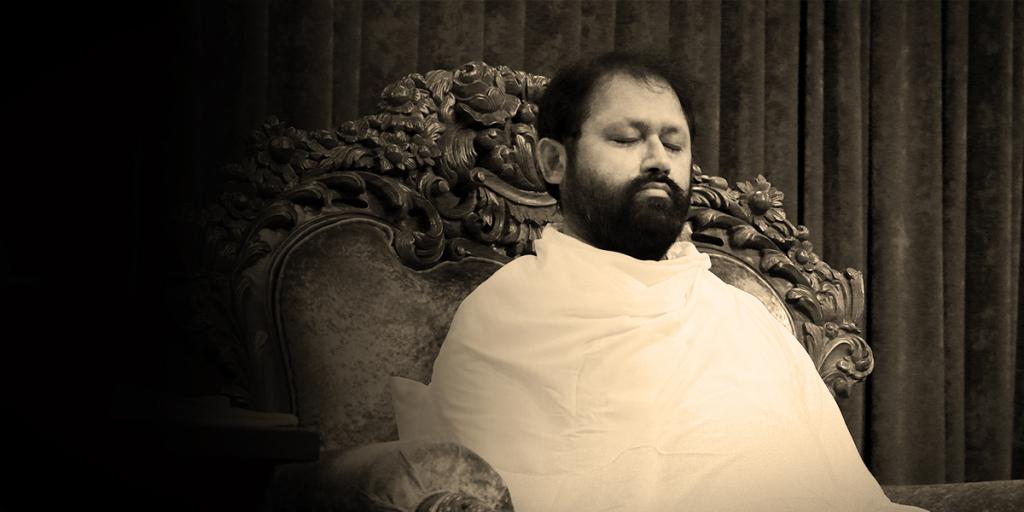
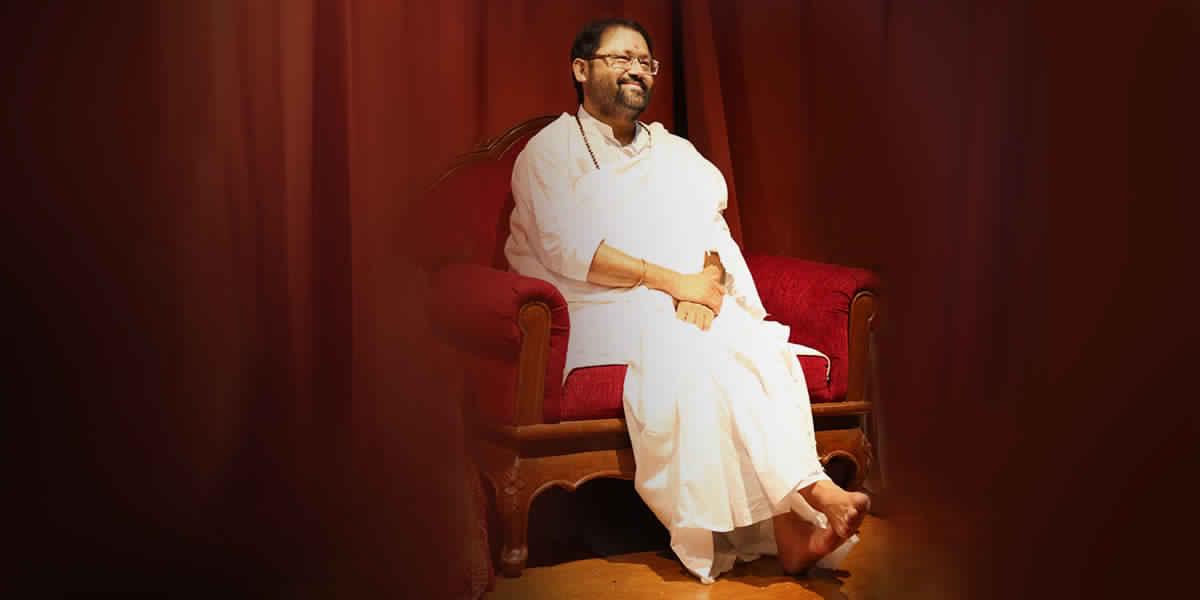

Dharma should touch your whole being, not just your tongue.