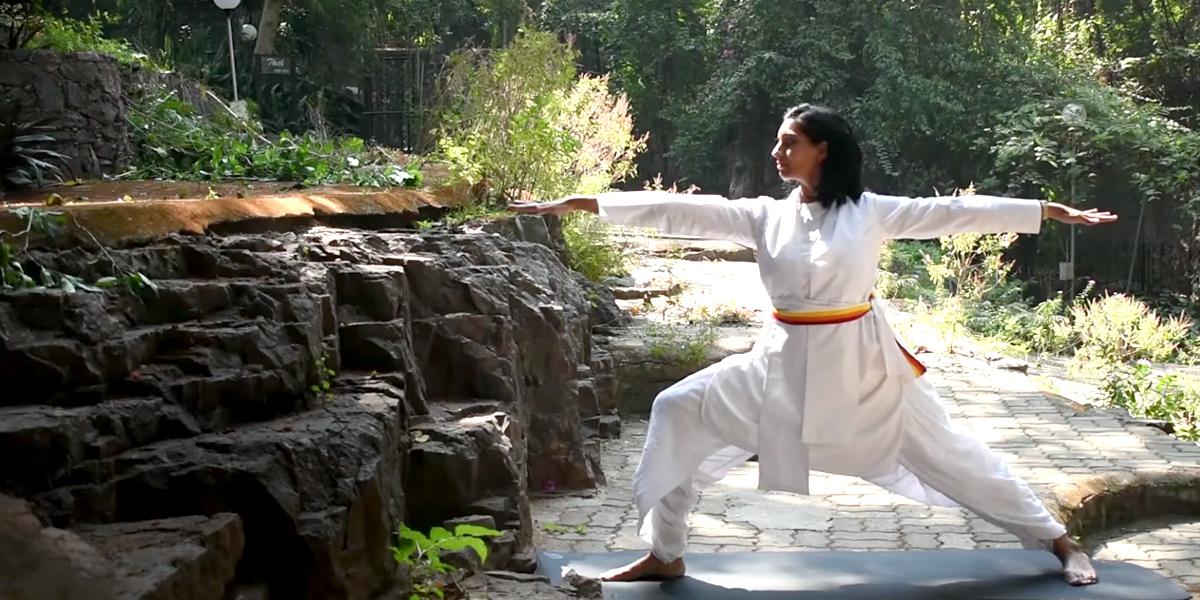
With the regular practice of Yoga, our goal is to use each category of asana to attain this state of ‘sthiram sukham asanam’. The 4 categories of asana are: standing, sitting, prone and supine. Each asana practice usually starts with standing asanas. This gets the energy pumping and activates the entire body. It is followed by sitting asanas which are good grounding asanas and provide an excellent stretch to the back and neck. Asana practice tends to end with prone and supine asanas which are usually more relaxing but also intense so as to strengthen the core and various body parts. Let us take a look at some examples of each category of asanas in order to practise them with a deeper understanding.
Standing Asanas Examples
Utkatasana (Chair Pose)
The first technique is to sit in Vajrasana after every meal. This will help stimulate the digestion process. Use this asana especially if you have eaten too much or have stomach cramps.
Trikonasana (Triangle Pose)
Create 3 to 4 feet distance between the legs. Turn your right foot out 90 degrees and left foot 45 degrees. Extend the arms out at shoulder level, reaching out to grab the right ankle with the right hand or bring it down all the way to the floor. Raise the left arm above the head with your drashti on the left palm and ensure the body is in one plane. Hold this position for 5 deep breaths and repeat on the other side.
Veerbhadrasana (Warrior Pose)
Keeping the 3-4 feet distance between the legs and with the right foot 90 degree outward, Inhale and raise both hands parallel to the ground and turn your head to the right. Slowly bend your right knee. Keep in mind that the right thigh should be parallel to the ground. Hold this position for 5 deep breaths.
Sitting Asanas Examples
Dandasana (Staff Pose)
Dandasana is one of the most common seated asanas. Come to a seated position with the legs straight out in front of you. Raise yourself high and sit tall from the torso and lower back, inhale bring your hands up and with an exhalation bend from the lower back and try to touch your ankle, toes or wherever you can reach. Hold this position for 5 deep breaths.
Ardha Matsyendrasana (Half Lord of the Fishes Pose)
Seated asanas are a great chance to also work on the back with a few twisting asanas including Ardha Matsyendrasana which consists of bringing the right knee close to the chest from dandasana, with the right foot grounded on the floor and inhaling raising the left arm up and on an exhale twist to the right, pushing the left elbow against the right knee. Inhale to untwist and exhale release.
Prone Asana Examples
Prone asanas are a great way to stretch the entire body from head to toe. Lie down on your stomach and raise the head, arms, and legs, strengthening and stretching the core and back muscles.
After this, one can also try Bhujangasana (Cobra Pose) by placing the palms on the floor next to the shoulders, raising the entire upper body from head to torso. Look up and feel a deeper stretch on the lower back. Come into balasana to counter the pose and release any tension in the back region.
Makarasana (Crocodile Pose)
Makarasana is practiced to relax the body after doing other yoga asanas. Lie down on the stomach, lift the arms up from the elbows and rest your face in the palm of your hands. Let the heels lie inward and toes pointed out and rest in this position.Supine Asana Examples
Chakrasana or Urdhva Dhanurasana (Wheel Pose)
If you want more of a challenge, roll onto your back to try one of the most advanced supine asanas. Many supine asanas are great for stretching the back, as is chakrasana. Bend the knees with the soles of the feet on the ground, rotate the hands and bring them next to your ears. With an inhalation, use your strength to lift the entire body up from the legs to the crown of the head with only the hands and feet pressing against the floor.
These four categories of asanas- standing, sitting, prone, and supine in this order makes any yoga practice complete and balanced. Each category has various asanas for which we have chosen a few to show, but you can easily categorize and practice all types of asanas, allowing for a whole and complete Yogic practice. Yogasana is a great exercise and way to start out the day so don’t miss out on structuring a wonderful Yoga flow for yourself to experience numerous benefits and more energy throughout the day!