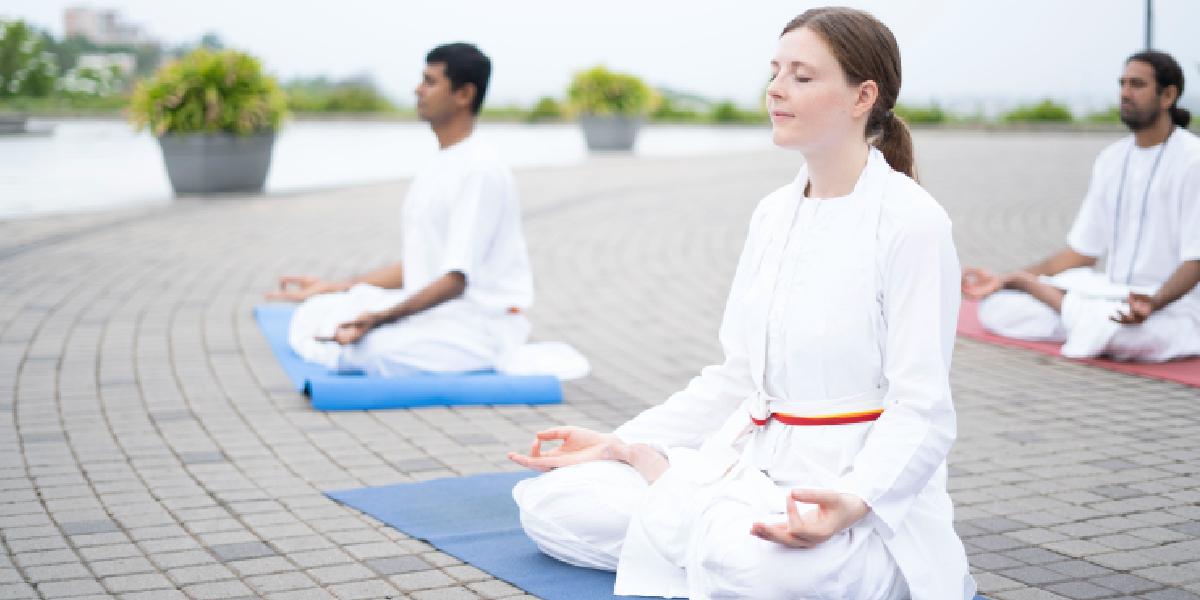
Meditation is necessary for better spiritual, emotional and mental health. Despite its various advantages, sitting for long periods of time can be a challenge initially. Many seekers experience pain in their legs due to lack of movement, which does not allow them to stay focused in the practice of meditation. It is therefore extremely important to stretch out certain muscles in the hips and lower back to have a physically pleasant meditation session. Let us learn how to prepare ourselves through specific asanas to be performed before meditation and alleviate the unwanted pain and tension.
What
Malasana
Why this Name
The name is derived from a combination of two Sanskrit words: ‘mala’ which means ‘garland’ and ‘asana’ which means ‘pose’. It is also known as the ‘Garland Pose’.
How to do it
- Stand with your feet hip distance apart and angled outwards.
- Inhale deeply.
- As you exhale, slowly bend your knees and lower your hips, coming into a squat. The knees should angle outwards, slightly wider than your torso.
- Press your elbows along the inside of the knees and join the palms into prayer position.
- Inhale as you lift and lengthen the torso. Keep the spine straight and the shoulders relaxed.
- Hold this position for 10 breaths.
- To release, bring your fingertips to the floor.
- Inhale and slowly straighten your legs and come up. Exhale and relax.
Which Benefits
- Stretches the thighs, groin, hips and ankles.
- Tones abdominal muscles.
- Increases blood circulation in the pelvic region.
- Improves balance, concentration and focus.
- Beneficial for pregnant women as practicing this pose helps during childbirth.
What
Baddha Konasasna
Why this Name
The name is derived from the Sanskrit words ‘baddha’ which means ‘bound’, ‘kona’ – ‘angle’ and ‘asana’ – ‘pose’. It is commonly known as the ‘Bound Angle Pose’.
How to do it
- Sit in Dandasana.
- Bend your knees and join both the soles of your feet.
- Inhale and pull the feet as close as possible towards the body.
- Exhale and push the thighs and knees towards the floor keeping the spine erect.
- Breathe normally and motion the legs like a butterfly flaps it’s wings by moving the knees up and down.
- Continue this movement for about 12-15 times.
- Exhale and slowly extend the legs back into Dandasana.
Which Benefits
- Stretches the groin and inner thighs.
- Opens pelvic region.
- Beneficial for the lumbar (lower back) region.
- Stimulates abdominal organs and improves blood circulation.
- Therapeutic treatment for asthma, infertility, high blood pressure and flat feet.
Let us gift ourselves a comfortable meditation practice by performing these asanas. The pain might not go away in a day, however constant and sincere efforts will definitely show results with time. So prepare yourself before sliding into meditation in order to enjoy a pain-free experience.






Deep yearning for God has the power to purify you, elevate you and even transform you.