In the constant movement of everyday life, the mind is occupied with thoughts, responsibilities, expectations and the pursuit of happiness. We spend much of our time responding to the world around us, often leaving little room to understand our own thoughts, emotions and inner nature. Amid this outward movement, an important question arises: how well do we truly know ourselves?
Spiritual growth begins when this question becomes a sincere desire to understand who we are beyond our roles, achievements and changing experiences. Meditation offers a way to turn inward, observe the mind and gradually discover a deeper dimension of our being.
What Is the Deeper Purpose of Meditation?
Meditation is often associated with relaxation, concentration and relief from everyday stress. While these may be valuable outcomes, its spiritual purpose extends beyond achieving a calm state of mind.
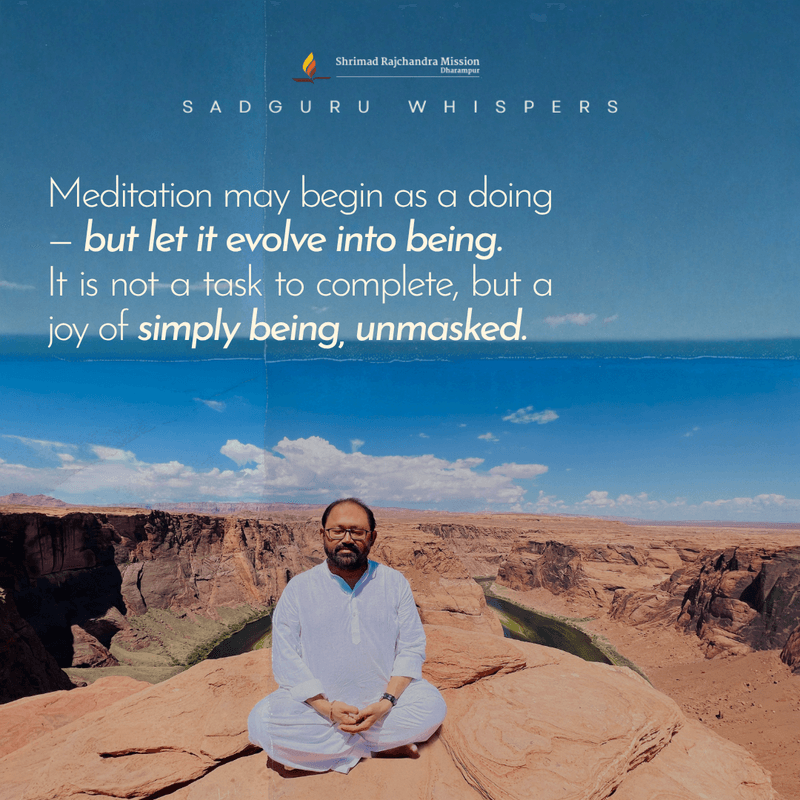
Spiritual meditation encourages us to look beyond passing thoughts, emotions and external circumstances to understand the nature of the Self. Instead of identifying with every thought or feeling, we learn to observe these experiences with greater clarity.
A thought may arise, remain for a while and eventually disappear. An emotion may influence our responses, yet it too changes with time. Through meditation, we begin to recognise this changing nature of our experiences which leads us to questioning whether they define who we truly are.
This shift in understanding is central to the spiritual journey. Meditation becomes a means to developing awareness and exploring the nature of our existence.
How Does Meditation Help Us Progress Towards Self-Realisation?
The soul has infinite qualities and is eternally blissful in nature. Yet, identification with the body, attachment, aversion and ignorance prevent us from experiencing our true nature.
Self-realisation involves recognising the soul’s distinct identity and moving beyond mistaken identification with what is temporary. Meditation supports this inward journey by encouraging sustained observation and awareness.
When we observe our thoughts without immediately reacting to them, we begin to recognise habitual patterns. We may notice how expectations create disappointment, how attachment gives rise to fear or how anger influences our judgement. These observations offer an opportunity to understand the causes of our inner disturbances rather than simply reacting to their effects.
Over time, this understanding can influence how we respond to situations and relate to others. We may become less reactive, more discerning and more conscious of our intentions.
Meditation, therefore, is not merely about experiencing a particular state of mind. It is about gaining insight into ourselves and progressing towards a clearer understanding of our true nature.
Can Meditation Help Us Discover Inner Peace?
We often believe that our circumstances must change before we can experience peace. We may wait for difficulties to pass, relationships to improve, or expectations to be fulfilled before allowing ourselves to feel at ease.
However, external situations remain subject to change. When our peace depends entirely on them, it can easily be disturbed.
Meditation for inner peace offers an opportunity to examine this dependence. By observing thoughts and emotions as they arise, we can begin to create space between an experience and our response to it. Instead of being carried away by every worry or frustration, we learn to meet these experiences with greater awareness.
This does not mean ignoring responsibilities or suppressing emotions. It means understanding them without allowing them to dictate every action.
Pujya Gurudevshri Rakeshji’s teachings on Sakshi Dhyan, or witnessing meditation, emphasise observing the mind and its thoughts without becoming entangled in them. Through this practice, seekers learn to watch thoughts come and go without engaging with each one.
This witnessing perspective encourages us to distinguish between the changing contents of the mind and the awareness through which they are observed. It offers a deeper understanding of inner peace and our relationship with the experiences that disturb it.
What Is the Connection Between Mindfulness and Spiritual Growth?
Mindfulness involves bringing attention to the present experience rather than allowing the mind to remain absorbed in memories, expectations or imagined outcomes. It can begin with noticing the breath, observing sensations or becoming aware of thoughts as they arise.
In the context of spiritual growth, mindfulness can become a foundation for deeper introspection. It helps us recognise habitual responses and understand how our attention moves throughout the day.
Consider an ordinary disagreement. An immediate reaction may be to defend ourselves, assign blame or revisit the incident repeatedly. With greater awareness, we may notice anger arising before it shapes our words and actions. This moment of observation creates an opportunity to respond more thoughtfully.
Such awareness can extend to everyday activities, relationships and decisions. We become more attentive to our intentions and more conscious of the consequences of our actions.
At a deeper level, spiritual practice encourages us to look beyond the experiences we observe and enquire into the nature of the observer itself. This enquiry takes meditation beyond momentary awareness towards a deeper experience of the Self.
How Can Sadhana Make Meditation Part of Everyday Life?
Spiritual progress requires sincerity, patience and consistent effort. A meaningful meditation practice develops through regularity rather than occasional enthusiasm.
Sadhana, or spiritual practice, provides a framework for this sustained effort. It involves engaging in introspection, spending moments in contemplation, making time for meditation, and gradually aligning our thoughts, intentions and actions with spiritual values.
A daily practice can begin with setting aside a quiet period for meditation. We can observe the breath, observe the movement of thoughts and gently return our attention to the practice whenever the mind wanders. Rather than judging every distraction, we learn to approach the practice with patience.
Reflection is also important. We can examine our reactions, recognise recurring patterns and consider how our understanding influences our behaviour.
The aim is not to force the mind into silence or measure progress through extraordinary experiences. It is to cultivate a deeper understanding of ourselves through sincere and consistent effort.
How Can Meditation Retreats Deepen Our Spiritual Practice?
Meditation retreats offer dedicated time and a structured environment in which seekers can explore their inner world with greater focus.
At Shrimad Rajchandra Mission Dharampur, these experiences are offered through Sadhana Bhatti, a series of meditation retreats designed by Pujya Gurudevshri Rakeshji.
The Mission’s Basic Sadhana Bhatti programmes are three-day residential retreats built around four themes: Living in Love, Dealing with Anger, Cultivating Gratitude and Practising Mindfulness. Each theme explores a different aspect of inner development, helping participants examine their thoughts, emotions and attitudes through guided meditation, introspection and contemplation.
The programmes incorporate discourses by Pujya Gurudevshri, guided meditation, complete silence, yoga and breathing exercises. Digital detox also provides participants with an opportunity to step away from everyday distractions and devote greater attention to their practice.
For seekers looking to deepen their meditation, Advanced Sadhana Bhatti introduces Sakshi Dhyan, the practice of witnessing consciousness. Participants learn to observe the mind and its thoughts without becoming involved in them. The retreat combines discourses by Pujya Gurudevshri, sakshi meditation, guided meditation, introspection, contemplation and complete silence to support this inward exploration.
The Mission also offers one-day advanced meditation programmes for eligible seekers who wish to revisit and strengthen their practice.
These retreats provide an opportunity to dedicate time to spiritual growth and understand meditation beyond its immediate effects. The insights gained can then be carried into everyday life, where consistent practice and self-observation continue to shape the spiritual journey.
How Do Spiritual Courses Support Holistic Well-Being?
Spiritual growth is closely connected to how we manage our thoughts, care for our well-being and relate to the people around us. Alongside its meditation retreats, the Mission offers SRMD Courses, including the Holistic Wellness programme designed by Pujya Gurudevshri Rakeshji.
The programme explores five dimensions of well-being: physical, mental, family, social and spiritual health. Its approach combines practical learning with activities such as self-reflection, journalling, group work and yogic practices.
These areas complement the inward work encouraged through meditation. Learning to manage thoughts, understand habitual patterns and reflect on our relationships can help us bring greater awareness into everyday decisions.
While meditation retreats provide dedicated time for inner exploration, holistic wellness courses address how the spiritual wisdom can be applied across different aspects of life. Together, these approaches offer opportunities to deepen self-awareness and develop a more enriching relationship with oneself and others.
Seekers can explore the available programmes through the official SRMD Courses page and the Mission’s meditation retreats page.
How Does Meditation Become a Journey of Self-Discovery?
Meditation gives us the opportunity to pause and observe what usually goes unnoticed. It helps us recognise the changing nature of our thoughts and emotions while directing our attention towards the deeper questions of existence.
As this understanding matures, spiritual growth begins to influence our outlook, our relationships and our responses to life’s uncertainties. We become more conscious of our reactions and less dependent on changing circumstances for our sense of peace.
Ultimately, meditation is a practice of turning within and cultivating greater awareness. Through the guidance of a realised master and sincere sadhana, it can become a meaningful path towards self-realisation.
FAQs
1. How does meditation support spiritual growth?
Meditation encourages self-awareness and a deeper understanding of one’s true nature, supporting the journey towards self-realisation.
2. Can meditation help achieve inner peace?
Yes. Regular meditation helps us observe thoughts and emotions with greater awareness, allowing us to respond to life’s challenges more thoughtfully.
3. What is the role of Sadhana in meditation?
Sadhana involves consistent spiritual practice, helping deepen awareness and integrate meditation into everyday life.
4. What are Sadhana Bhatti retreats at SRMD?
Sadhana Bhatti retreats at Shrimad Rajchandra Mission Dharampur offer guided meditation, introspection and spiritual learning under the guidance of Pujya Gurudevshri Rakeshji.
5. What is Sakshi Dhyan?
Sakshi Dhyan is a witnessing meditation practice that encourages observing thoughts without becoming involved in them, supporting deeper awareness of the Self.