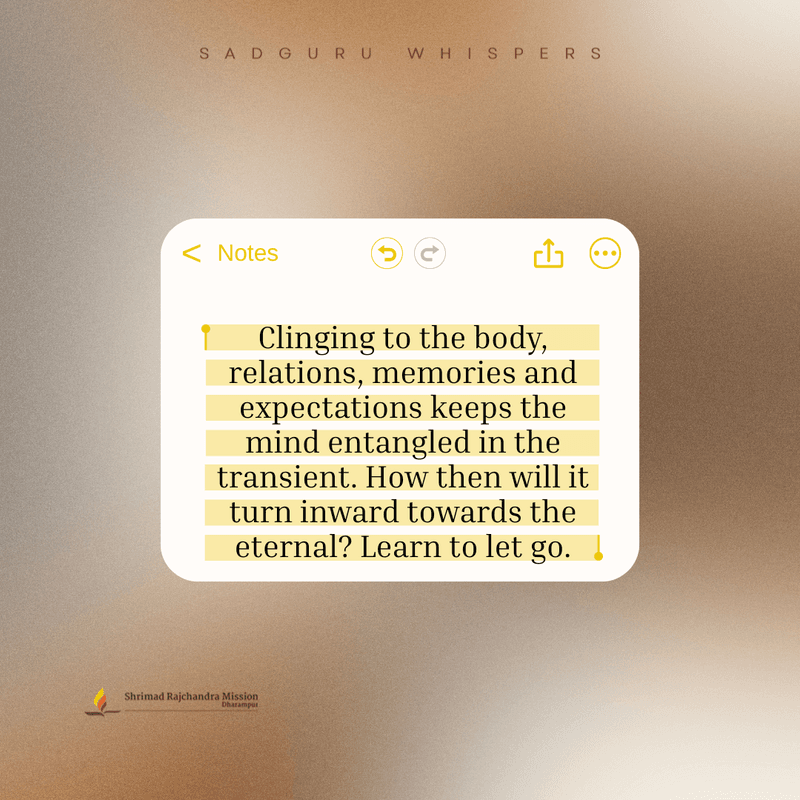
In the movement of everyday life, our attention is constantly drawn outward towards people, possessions, responsibilities, experiences and the endless stream of thoughts that fill the mind. Paryushan offers a sacred pause. It invites us to turn away from this outward movement and gently redirect our awareness towards the Self.
The Paryushan Jain festival is one of the most significant spiritual observances in Jainism. Celebrated over eight or ten days, depending on the Jain tradition, Paryushan is a time for introspection, spiritual practices, restraint and forgiveness. At its heart is the aspiration to move closer to one’s true nature.
For those observing Jain Paryushan, the period can become much more than a calendar of rituals or religious observances. It can become an opportunity to pause, observe oneself and cultivate an inward orientation that continues beyond the festival.
7 Paryushan Practices to Make Your Inward Journey More Meaningful
Here are seven practices that can help make this inward journey more meaningful.
1. Create Space for Silence
Turning inward begins with creating some distance from the constant noise of the outside world.
During Paryushan, consciously reduce unnecessary conversations, entertainment and other outward engagements. This does not mean withdrawing from responsibilities, but becoming more discerning about where you place your attention.
Even a few moments of quietude each day can help you observe your thoughts instead of being carried away by them.
Silence is not simply the absence of speech. It is an opportunity to become aware of what continues within when external stimulation becomes less.
2. Practise Samayik: Come into the Present
Samayik is an important Jain spiritual practice centred on equanimity and being established in the present moment.
As Pujya Gurudevshri Rakeshji explains, the inward journey requires moving beyond the pull of the past and the future and becoming present. The present can become a gateway to experiencing the Self.
During Paryushan, set aside dedicated time for stillness and self-awareness. Allow thoughts, emotions and memories to arise without immediately identifying with them.
The practice is not about forcing the mind to become blank. It is about becoming a witness and gradually shifting attention from the changing to the unchanging.
3. Perform Pratikraman with Awareness
Pratikraman is traditionally associated with reflection, repentance and turning back from one’s faults. At a deeper level, it is an inward movement withdrawing awareness from its outward wandering and redirecting it towards the Self.
Instead of approaching Pratikraman mechanically, pause and sincerely reflect:
Where did anger arise within me?
When did I hurt someone through my thoughts, words or actions?
Where did attachment, pride, deceit or greed influence me?
What can I learn from these moments?
Such reflection transforms an external observance into an opportunity for inner purification.
4. Practise Forgiveness — Towards Others and Yourself
Forgiveness is one of the central spiritual dimensions of Paryushan.
The practice of seeking forgiveness encourages us to look honestly at the hurt we may have caused and to release resentment towards those who may have hurt us. The spirit of Micchami Dukkadam expresses this sincere seeking of forgiveness.
But forgiveness also requires inner honesty. Rather than defending our actions or holding on to resentment, we can learn to acknowledge our mistakes without allowing guilt to become another form of attachment.
Paryushan reminds us that forgiveness is not merely something we offer to others. It is a process of freeing our own consciousness from the weight of anger, hurt and regret.
5. Simplify Food and Other Worldly Activities
The Paryushan rules and observances vary across Jain traditions, families and individual capacities. Practices may include fasting, dietary restraint, limiting certain foods and consciously reducing worldly activities.
The deeper purpose of such restraint is not simply physical discipline. It is to reduce the pull of the senses and create greater space for awareness and spiritual contemplation.
For someone who is not undertaking a particular fast, simplicity can still become a meaningful practice. Eat mindfully. Reduce indulgence. Avoid unnecessary consumption. Use the time and energy saved to engage in swadhyay, meditation or reflection.
The emphasis should remain on the inner bhav, the intention and awareness behind the practice.
6. Make Listening to Discourses a Journey of Reflection
Paryushan is an especially meaningful time for listening to the teachings of the Enlightened Ones.
Yet spiritual study becomes transformative when it moves beyond collecting knowledge. Listening to a discourse can point us towards the truth, but the real journey begins when we examine our own life in its light.
As Pujya Gurudevshri Rakeshji explains, the purpose of spiritual teachings is to facilitate the inward journey.
After listening, pause and ask:
What does this reveal about me?
Where can I apply this understanding in my life?
Am I merely knowing the teaching, or am I living it?
This shift from information to introspection can make this swadhyay deeply transformative.
7. Let the Inward Journey Continue Beyond Paryushan
The greatest value of Paryushan lies in what it awakens within us and what we carry forward from it.
The festival may have designated days, practices and observances, but the journey towards the Self is not limited to those days. The awareness cultivated during Paryushan can gradually become part of everyday life.
When anger arises, pause.
When attachment takes over, observe.
When the mind runs towards the past or future, return to the present.
When an opportunity to forgive arises, choose forgiveness.
When the world pulls your attention outward, remember to turn within.
This is the essence of an inward journey: not escaping the world, but changing the direction of our awareness.
Making Paryushan a Journey Within
The Jain festival Paryushan offers a rare opportunity to slow down and examine the direction in which our consciousness is moving. Its practices of restraint, swadhyay, Pratikraman, Samayik and forgiveness can become powerful means of inner transformation when undertaken with awareness.
For those looking up the Paryushan 2026 , Paryushan Mahaparva will be observed from 8 to 15 September 2026. During these dates, SRMD will also be conducting its Paryushan Mahaparva celebrations in Mumbai.
The deeper invitation of Paryushan is to discover that what we continually seek outside may be found by turning within.
Move from the outer world to the body, from the body to the mind, from the mind to feelings, and ultimately towards the knower.
May this Paryushan be an opportunity not merely to observe a sacred festival, but to take a sincere step towards the Self with greater awareness, humility, forgiveness and inner stillness.
FAQs
1. What is Paryushan?
Paryushan is an important Jain festival dedicated to self-reflection, spiritual discipline, forgiveness and turning inward.
2. When does Paryushan 2026 begin?
Shwetambar Jains will observe Paryushan Mahaparva from 8 to 15 September 2026, with Samvatsari on 15 September.
3. What are the main Paryushan practices?
Key practices include Samayik, Pratikraman, listening to discourses and swadhyay, fasting or dietary restraint, meditation and seeking forgiveness.
4. What are the Paryushan rules?
Paryushan rules vary according to tradition and individual practice, but generally emphasise restraint, non-violence, self-discipline, spiritual study and forgiveness.
5. How can Paryushan help us turn inward?
Paryushan creates space for silence, self-observation and reflection, helping us shift our attention from external pursuits towards inner awareness.