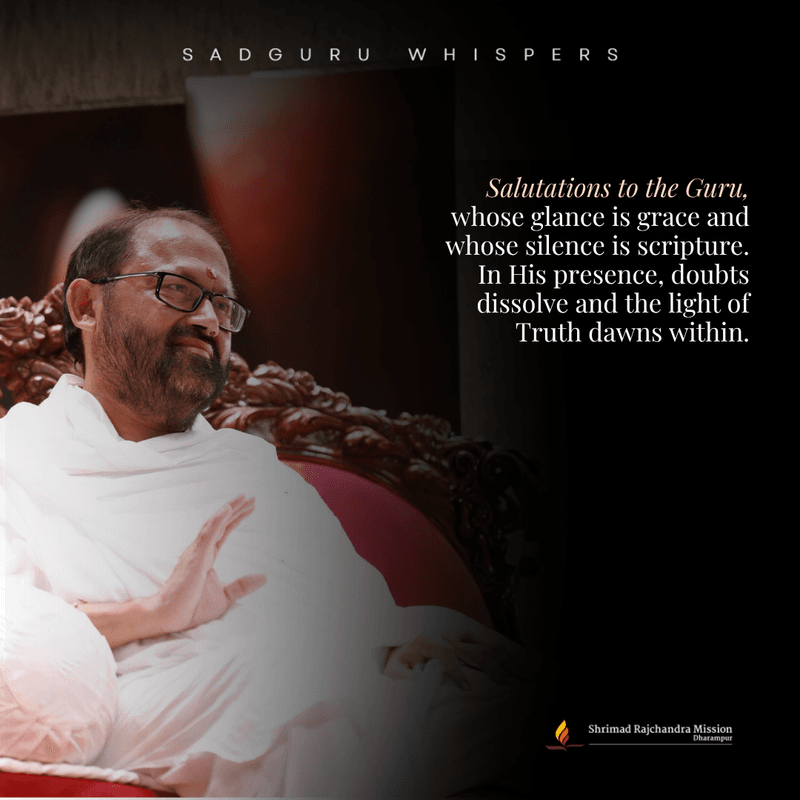
During Paryushan, the words “Micchami Dukkadam” are heard and spoken repeatedly. We seek forgiveness from family, friends, acquaintances and, in spirit, from all living beings. Yet, in the midst of following this beautiful tradition, an important question can arise: What does Micchami Dukkadam truly mean to us?
Is it simply something we say because it is customary during Paryushan? Or can these words become the beginning of a deeper inner transformation?
Pujya Gurudevshri Rakeshji’s teachings offer a profound perspective. They remind us that Micchami Dukkadam is not meant to remain a ritual performed because tradition asks us to do so. Its true significance lies in the inner revolution it can inspire.
Beyond a Ritual: The Meaning of Micchami Dukkadam
Micchami Dukkadam expresses the intention that our wrongful actions may be rendered futile. It is an acknowledgement of the mistakes, hurt and negativity that may have arisen through our thoughts, words or actions.
But simply saying the words is not enough. Their meaning begins to unfold when we genuinely pause and look within.
Pujya Gurudevshri Rakeshji explains that when we bow our head and fold our hands while saying Micchami Dukkadam, we are also learning to bend our ego. The gesture becomes an expression of flexibility and humility.
We may have held firmly to our opinions, judgements and perceptions of others. Micchami Dukkadam gives us an opportunity to loosen that grip.
It invites us to ask ourselves: Can I let go of the need to be right? Can I acknowledge that, in a moment of low awareness, I may have judged another person? Can I begin again without carrying yesterday’s resentment into today?
Washing the Mind Before We Begin the Day
We wash our hands before eating. We cleanse our bodies before beginning many activities. Pujya Gurudevshri Rakeshji offers a beautiful reflection: perhaps we can also learn to cleanse the mind before beginning our interactions with others.
Throughout the day, we form impressions about people. A conversation may leave us hurt. Someone’s words may irritate us. We may develop a prejudice or silently decide that someone is difficult, selfish or hopeless.
These impressions can stay within us long after the incident has passed.
Micchami Dukkadam offers a way to pause and release them.
This is where the practice becomes relevant beyond Paryushan. It reminds us to examine the judgements we carry and consciously choose not to create new ones. In this sense, forgiveness becomes a daily practice of awareness.
From Alochana to Inner Transformation
Jain spiritual practices place great importance on looking within and recognising one’s own shortcomings. Alochana, honest self-reflection and acknowledgement of one’s faults, can help us become aware of the ways in which we may have caused hurt or acted without awareness.
This inward-looking nature is central to the spirit of Paryushan. The festival offers an opportunity to turn our attention away from the endless activities of the external world and towards the state of our own mind.
Similarly, Pratikraman encourages us to reflect upon our actions and clear our mind of the bitterness we have collected and complaints that we have created.
Micchami Dukkadam can therefore become much more meaningful when it arises from genuine introspection. We are not merely asking another person for forgiveness. We are also taking responsibility for what has happened within us.
The Role of Vyakhyan in Deepening Understanding
Spiritual discourses and the guidance of enlightened masters can help us understand the deeper purpose behind practices that may otherwise become routine.
Pujya Gurudevshri Rakeshji’s insight transforms Micchami Dukkadam from a customary expression into a powerful practice of releasing.
He explains that when we release an incident, we do not necessarily have to release the person from our life. What needs to be released is the resentment created by the incident.
This distinction is profound.
Someone may have hurt us. We may choose to maintain distance from that person for practical reasons. But carrying anger, bitterness or resentment within ourselves only keeps the incident alive.
Forgiveness allows us to close that chapter within.
Deeper Purpose of Paryushan Rituals
The deeper purpose of Paryushan cannot be limited to following Paryushan rituals externally. The practices and disciplines associated with the festival are meant to support an inner journey.
Micchami Dukkadam reminds us that spiritual growth is reflected in the way we relate to others and, equally importantly, in the way we relate to our own thoughts and emotions.
When we sincerely seek forgiveness, we soften the ego. When we forgive, we release resentment. When we reflect upon our actions, we create greater awareness.
This makes Micchami Dukkadam much more than a phrase exchanged during Paryushan.
The Art of Releasing
Perhaps the most beautiful way to understand Micchami Dukkadam is as the art of releasing.
We often believe that holding on gives us strength. We remember what someone said, how they treated us and why we were hurt. Yet, the incident may have ended long ago. What remains is the resentment we continue to carry.
Pujya Gurudevshri Rakeshji reminds us to release the incident. To forgive is to choose freedom from the burden of resentment.
As Paryushan invites us to turn inward, Micchami Dukkadam gives us an opportunity to look at what we have been carrying and gently let it go.
When spoken with awareness, these simple words can become a powerful expression of humility, forgiveness and inner freedom.
Perhaps, then, the true question is not simply, “Have I said Micchami Dukkadam?”
It is: “Have I truly released?”
FAQs
1. What is Micchami Dukkadam?
Micchami Dukkadam is a Jain expression of seeking forgiveness for any hurt or wrongdoing caused knowingly or unknowingly.
2. Why is Micchami Dukkadam important during Paryushan?
It encourages self-reflection, forgiveness and the release of resentment, making Paryushan a deeper journey of inner purification.
3. When is Micchami Dukkadam said?
Micchami Dukkadam is traditionally said at the end of Paryushan, especially on Samvatsari, as an expression of forgiveness.
4. What is the spiritual meaning of Micchami Dukkadam?
It represents humility, self-awareness and the willingness to release resentment and seek forgiveness.
5. How does Micchami Dukkadam help with forgiveness?
It encourages us to acknowledge our mistakes, seek forgiveness and let go of resentment caused by past incidents.