What is so special about the Surya Namaskara?
When we do our typical workout, we tend to focus on a certain part of the body, which restricts the exercise to work on limited muscles. However, the Surya Namaskara is unique in the sense that it’s the only practice that allows you to use most of our muscles in the body at once. Naturally, this practice will help with healthy digestion, improve lung capacity and blood circulation, and stimulate the nervous system to name a few but it does not stop here as this practice also reduces negative energy and includes anti-anxiety and calming properties. So don’t forget to start your day off with this practice!
Surya Namaskara is translated as the “Eternal Salutations to the Sun” where the sun symbolizes the Soul and source of life. Undoubtedly, this practice will bring dynamism and vigor to each day.
Steps of the Surya Namaskara
Namaskarasana – Stand with the feet together and hands in prayer position. Breathe deeply.
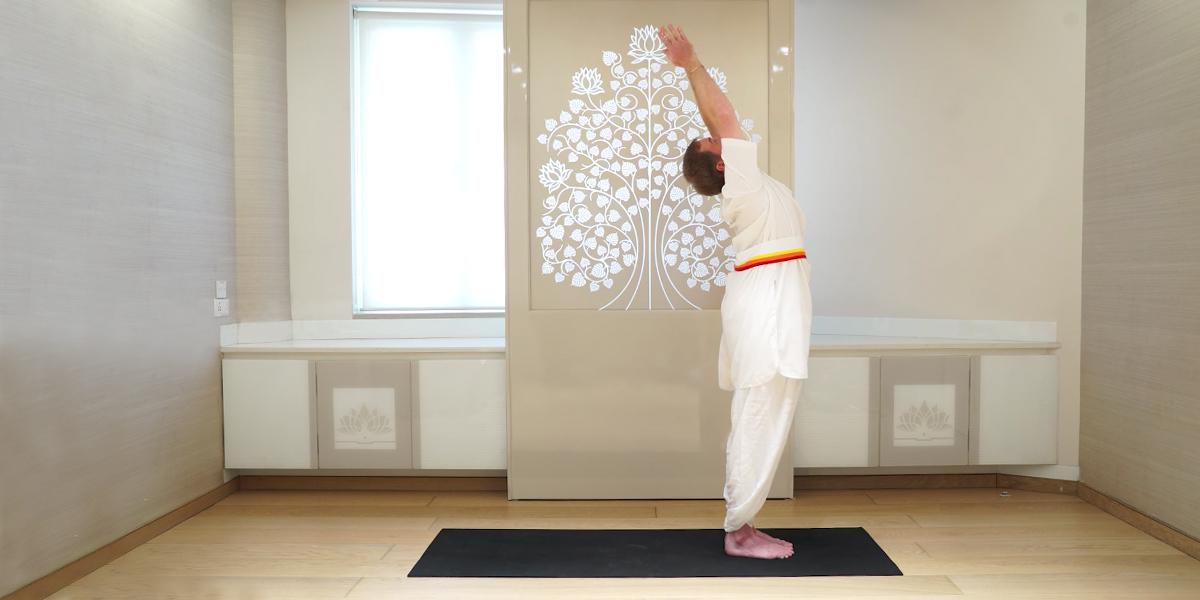
Ardha chandrasana – Inhale, bring the arms forward and upwards, stretching as high as possible. Arch the back gently by pushing the arms back and the pelvis forward.
Uttanasana – Exhale, bend forward from the hips until the fingers of the hands touch the floor on either side of the feet.
Vanarasana – Inhale, take the right leg back as far as possible, placing the right knee on the floor with the sole facing the ceiling. Look slightly upwards.
Phalakasana – Exhale, take the left leg back next to the right leg. Bring the body into a straight line keeping the knees straight. Just like the ‘plank position’.
Ashtanga namaskara – Inhale, bring the body forward and let your chin, chest, palms of both hands (on either side of the chest), knees, and toes touch the floor. Raise your posterior. Exhale deeply.
Sarpasana – With the hands under the shoulders, elbows close to the body, and heels together, inhale and press the pelvis to the ground and lift the chest up.
Adho mukh swanasana – Exhale, come up on your hands and feet in an inverted ‘V’ position. Bring the hips upwards and press the heels into the ground.
Vanarasana – Inhale, bring the right foot forward. Keep the left knee on the ground and left foot facing the ceiling as you look up.
Uttanasana – Exhale, bring the left foot alongside the right while maintaining the forward bend.
Ardha chandrasana – Inhale, come up to a standing position, stretching the arms straight up and back, pushing the pelvis frontwards.
Namaskarasana – Bring the hands back to prayer position on the last exhalation. To complete a full round, repeat the sequence, leading with the left foot.
One may wonder: ‘ideally, how many surya namaskaras should we do before our yoga practice?’
Surya Namaskara can be done for any number of rounds, directly followed by asana practice. However, the number tends to vary between 3 rounds for beginners to 12 rounds for advanced practioners. Each set can be done while chanting a mantra and synchronizing the breath with each movement. Adding mantras during the practice removes monotony, provides harmony within and produces soothing vibrations which removes fatigue. Let’s learn the ancient yogic way of doing surya namaskaras by following the diagram.
1. NAMASKARASANA – THE PRAYER POSE – OM MITRAYA NAMAHA

2. ARDHACHANDRASANA – HALF MOON POSE – OM RAVAYE NAMAHA

3. UTTANASANA – STANDING FORWARD BEND – OM SURYAYA NAMAHA

4. VANARASANA – MONKEY POSE – OM BHANAVE NAMAHA

5. ADHO MUKHA SVANASANA – DOWNWARD FACING DOG – OM KHAGAYA NAMAHA

6. ASHTANGA NAMASKARA – EIGHT-LIMBED SALUTATION – OM PUSHNE NAMAHA

7. SARPASANA – COBRA POSE – OM HIRANYA GARBHAYANAMAHA

8. ADHO MUKHA SVANASANA – DOWNWARD FACING DOG – OM MARICHAYE NAMAHA

9. VANARASANA – MONKEY POSE – OM ADITYAYA NAMAHA

10. UTTANASANA – STANDING FORWARD BEND – OM SAVITRE NAMAHA

11. ARDHACHANDRASANA – HALF MOON POSE – OM ARKAYA NAMAHA

12. NAMASKARASNA – THE PRAYER POSE – OM BHASKARAYA NAMAHA

All in all, Surya Namaskara is a vital aspect to yogic practice. When practiced in haste or as a mere workout, the gain may only be physical; however, when practiced with awareness and in rhythm with the breath and postures, the practitioner will experience physical, mental and spiritual expansion. Let us put laziness aside by starting each morning with this wonderful classical Surya Namaskara in order to experience its manifold benefits!